how-to
How to Choose a High-Performance Home Builder
Table of Contents
- What Defines a High-Performance Home Builder
- Key Questions to Ask Custom Home Builders
- Verify Certifications and Credentials
- Understanding Energy Efficient Home Building Standards
- Evaluate High-Performance Home Construction Costs
- Request and Review References from Past Projects
- Establish Contractual Safeguards and Scope Control
- Plan for Post-Occupancy Performance Monitoring
Last Updated: August 24, 2026
What Defines a High-Performance Home Builder
A high-performance home builder is a contractor who specializes in designing and constructing homes that exceed standard building codes by prioritizing energy efficiency, durability, indoor air quality, and long-term performance. These builders combine advanced building science knowledge with precision construction methods to create homes that use significantly less energy, maintain consistent comfort, and require less maintenance over their lifetime.
What separates high-performance builders from conventional contractors is their systematic approach to the building envelope. They understand thermal bridging, airtightness, moisture management, and ventilation as interconnected systems rather than isolated components. A high-performance home builder engineers the entire home as a system, not following a checklist. This distinction matters because it changes what you should look for when choosing a builder: you're assessing whether they understand building science deeply enough to make the right trade-offs when problems arise on site.
Key Questions to Ask Custom Home Builders
The right questions reveal whether a builder has genuine expertise or is simply following a template. Your questions should probe three areas: technical knowledge, project management discipline, and long-term accountability.
Building Science and Technical Knowledge
Ask your builder: "Walk me through how you design the thermal envelope for this climate, and explain how your approach handles moisture."
Listen for whether they discuss the building envelope as a system. A builder who talks about individual components, "We use R-20 insulation and triple-pane windows", is thinking in parts. A builder who explains how those components work together to minimize thermal bridging and manage vapor drive is thinking in systems.
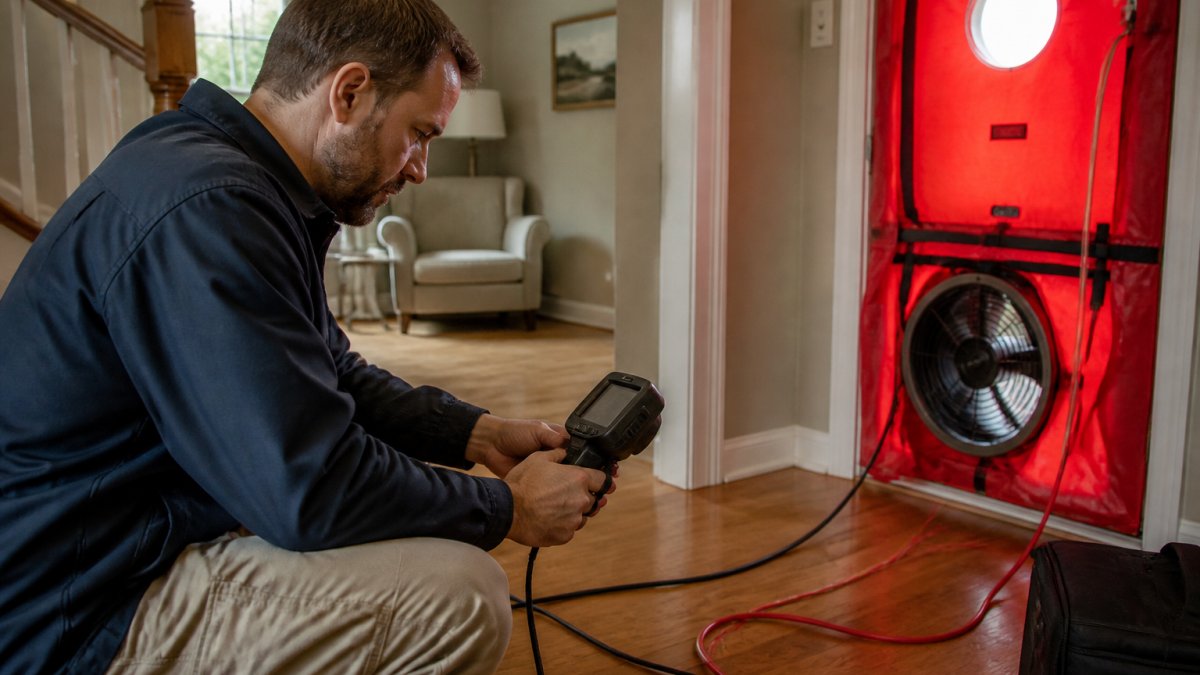
Follow up by asking about airtightness: "What's your target air leakage rate, how do you achieve it, and how do you verify it?" High-performance builders typically target 3 air changes per hour at 50 pascals (ACH50) or better, measured with a blower door test ([EXTERNAL_LINK: Passive House Institute on blower door testing | passivehouse.com]). They should have a specific strategy for sealing details, tape selection, and caulk timing.
Ask about their HVAC design process. Do they specify equipment based on Manual J calculations? Can they explain why a heat recovery ventilator or energy recovery ventilator makes sense for your climate and home size? Request their approach to moisture control: "How do you prevent condensation in walls during winter? What's your strategy for drying if water does enter the assembly?" This reveals whether they understand vapor barriers, air barriers, and the difference between them.
Project Management and Site Supervision
Ask: "How do you ensure quality control during construction? What's your site supervision schedule, and who's responsible for inspections?"
High-performance homes require consistent attention to detail. Thermal bridges, air leaks, and moisture problems often result from construction lapses. Builders who visit multiple times per week catch problems before they're hidden behind drywall.
Ask about their communication process. How will you stay informed about progress, decisions, and problems? A high-performance home builder should have a system, not just occasional phone calls. At Timeless General Contracting, we use a real-time Client Project Portal so homeowners can track progress, review photos, and see decisions documented without waiting for scheduled updates.
Ask about change order management: "How do you handle scope changes? What's your process for documenting them, and how do you prevent costs from spiraling?" A builder with a formal change order process, written documentation, and pricing agreed before work begins protects both of you.
Warranty and Post-Occupancy Support
Ask: "What warranty do you provide, and what's covered? How do you handle warranty claims?"
High-performance homes are complex, and issues that appear months or years after completion require a builder who stands behind their work. Ask whether they offer a comprehensive warranty or just the minimum required by law.
Request post-occupancy support: "Will you help us understand how to operate this home for best performance? Will you be available if we have questions about the HVAC system or humidity levels?" A builder who provides commissioning, training on systems, and optimization after move-in demonstrates confidence in their work and commitment to performance.
Verify Certifications and Credentials
Certifications matter, but they're not the whole story. A Red Seal certification proves that a builder has met federal standards for trade knowledge and experience. In Canada, Red Seal trades relevant to high-performance building include carpenter, electrician, plumber, and HVAC technician.

However, Red Seal certification doesn't guarantee high-performance expertise. Ask which certifications your builder holds and, more importantly, ask about their specific training in high-performance building methods. Look for credentials in energy modeling, building science, or passive house design through organizations like the Passive House Institute or the Canadian Home Builders' Association.
Verify certifications independently by requesting documentation and confirming with the issuing body. Ask about liability insurance and bonding. Your builder should carry comprehensive liability insurance and performance bonding that protects you if the builder fails to complete the work or meet contractual obligations.
Understanding Energy Efficient Home Building Standards
High-performance building in Canada is shaped by building codes, energy standards, and emerging performance frameworks. The National Building Code of Canada sets minimum standards for energy efficiency, but high-performance builders typically exceed these minimums ([EXTERNAL_LINK: National Research Council Canada National Building Code | nrc.gc.ca]). Ask your builder whether they design to Step Code requirements, a progressive energy performance standard adopted by many provinces and municipalities. Homes built to Step Code 3 or 4 perform significantly better than code-minimum homes.
Ask your builder about EnerGuide ratings, the Canadian equivalent of HERS scores. An EnerGuide rating of 80 or higher indicates strong energy performance ([EXTERNAL_LINK: Natural Resources Canada EnerGuide ratings | nrcan.gc.ca]). If net-zero is your goal, ensure your builder has experience with renewable energy system design, battery storage integration, and performance verification.
Ask your builder how they stay current with evolving standards. A builder who reads industry publications, attends conferences, and participates in professional networks is more likely to incorporate emerging best practices.
Evaluate High-Performance Home Construction Costs
High-performance homes cost more than conventional homes. Ask your builder for a detailed cost breakdown. Where does the high-performance premium go? Is it additional insulation, better windows, more rigorous air sealing, HVAC system design, or renewable energy? A builder who can itemize these costs demonstrates that the premium reflects real improvements.
Understand the long-term economics. A high-performance home costs more upfront but delivers lower operating costs, improved durability, and better resale value. Ask your builder for an estimated payback period. If heating costs drop by 40% and your annual savings are $2,000, the payback on a $20,000 efficiency premium is ten years, a reasonable investment for a home you plan to occupy for 20+ years.
Be cautious of builders who cannot justify their premium with specific performance metrics. Ask about financing options; some builders partner with lenders who offer favorable terms for high-performance homes, recognizing that lower operating costs reduce financial risk.
Request references from homeowners who have lived in the builder's high-performance homes for at least one year. Ask whether actual operating costs matched projections and whether they encountered unexpected issues.
Request and Review References from Past Projects
References are your window into whether a builder's promises translate to reality. Ask your builder for at least five references from completed high-performance homes, specifically from projects completed at least two years ago.

When you contact references, ask specific questions: Did the builder meet the timeline and budget? Were there unexpected costs or delays? How was communication during construction? Most importantly: Is the home performing as promised? Are energy bills lower than expected? Have there been moisture or comfort issues?
Ask references whether they would hire the same builder again. Visit completed projects in person if possible. Ask your builder for performance data from completed homes, such as energy audits or blower door tests. Be wary of builders reluctant to provide references or who provide only family members or business associates.
Establish Contractual Safeguards and Scope Control
A detailed contract protects both you and the builder. For a high-performance home, your contract should address performance standards explicitly. Include a detailed scope of work specifying materials, equipment, and performance targets. For example: "Exterior insulation: 150 mm (6 inches) of rigid XPS foam, R-30 minimum. HVAC system: sized per Manual J calculation, 3-ton capacity, variable-speed compressor. Airtightness: target 3 ACH50, verified by blower door test."
Define performance standards and verification methods. If your contract specifies a target EnerGuide rating, include how it will be verified and what happens if the home doesn't meet the target.
Include a detailed change order process specifying that all changes must be documented in writing with scope and cost agreed before work begins. Define the warranty clearly, specifying what's covered, for how long, and the builder's obligations if defects appear. Include provisions for moisture issues, air leakage, and performance shortfalls.
Include a commissioning and training clause specifying that the builder will provide training on home systems and remain available for questions during the first year of occupancy. Address payment terms and include a final holdback (typically 10% of contract value) retained until all work is complete and verified.
Consider including a performance guarantee where the builder guarantees that a home will achieve a specified EnerGuide rating or energy consumption target. Have a lawyer review your contract before signing.
Plan for Post-Occupancy Performance Monitoring
The work doesn't end at the final walkthrough. Establish a monitoring plan before occupancy. What data will you track? Monthly utility bills are the baseline. Consider more detailed monitoring: smart thermostats that log temperature and humidity, sub-metering that tracks consumption by system, or annual blower door tests to verify that airtightness is maintained.
Schedule a commissioning visit with your builder within the first month of occupancy. Walk through the home together, test systems, and adjust thermostat setpoints based on your comfort preferences. Ask the builder to explain how to operate the home for best performance.
Monitor for performance drift. High-performance homes sometimes underperform because occupants use systems incorrectly or because equipment requires adjustment. Regular check-ins with your builder help catch these issues.
Plan for annual maintenance. High-performance homes have more complex systems than conventional homes. Budget for annual maintenance and schedule it with your builder or a qualified technician. Consider a professional energy audit one year after occupancy to identify air leaks, insulation gaps, or equipment problems.
Track long-term performance by keeping records of utility bills, maintenance costs, and any issues that arise. After five years, you'll have a clear picture of whether the home is performing as designed.
Choosing a high-performance home builder is one of the most important decisions you'll make as a homeowner. Look for builders who combine technical expertise in building science with disciplined project management and genuine commitment to post-occupancy performance. Verify credentials independently, ask specific questions about systems and processes, and review references from completed projects. At Timeless General Contracting, we bring 25 years of experience and Red Seal certification to every project, with real-time transparency through our Client Project Portal so you stay informed from start to finish. A high-performance home requires a builder who understands the details and stands behind the results.
Frequently Asked Questions
Q: What certifications should a high-performance home builder hold?
A: A high-performance home builder should hold Red Seal certification in their trade, demonstrating they meet interprovincial standards. Look for builders trained in building science and passive house principles. Certifications in energy auditing, HVAC design, and airtightness testing show specialized knowledge. Verify credentials directly with the certifying body rather than taking claims at face value.
Q: How do I verify a builder's experience with energy-efficient construction?
A: Request references from at least three completed high-performance projects and contact those homeowners directly. Ask about thermal envelope performance, moisture management outcomes, and whether the home met its predicted energy efficiency targets post-occupancy. Request energy audit reports from past projects. Ask the builder to explain their approach to thermal bridging, ventilation systems, and building envelope design, their technical depth will reveal genuine expertise.
Q: What questions should I ask about high-performance home construction costs?
A: Ask for a detailed cost breakdown that separates high-performance materials and systems from standard components. Understand the true cost of premium insulation, heat recovery ventilators, renewable energy systems, and airtightness testing. Ask about long-term savings through reduced energy consumption and durability. Request a clear contract that defines scope, change-order procedures, and cost controls to prevent scope creep. Pricing depends on your specific performance targets and local labour rates, get a formal quote for comparison.
Q: How can I prevent cost overruns and scope creep on a high-performance build?
A: Establish a detailed contract that defines performance metrics, materials, and specifications upfront. Require written approval for all change orders before work begins, not after. Ask the builder about their project management process and real-time tracking capabilities. Regular site supervision and clear communication checkpoints help catch issues early. A builder with transparent processes and documented workflows is more likely to keep costs controlled than one with vague timelines or informal communication.
This article was written using GrandRanker