 blog
What to Ask at a Renovation Consultation?
Last Updated: October 24, 2026
Quick Summary
Ask about licensing, insurance and references before the walkthrough, then cover scope, permits, allowances, contingency, change orders, timeline and payment schedule during the renovation consultation. Get every question and every answer in writing, and compare proposals side by side using the same categories.
- Request three references from projects finished in the last two years, ideally of similar size and scope.
- Ask for the certificate of insurance directly from the contractor's insurer or broker, not just a photocopy.
- A bid that omits a line another bid includes is not cheaper, it is incomplete.
- Ask for 48 hours to review the contract and proposal before signing anything.
- Record the walkthrough on your phone with permission or take notes in real time.
Table of Contents
- Why the Renovation Consultation Decides Your Project
- Questions to Ask a Contractor Before Remodeling
- Your Renovation Consultation Checklist, Stage by Stage
- Scope, Budget and Cost Controls
- Renovation Project Timeline Questions
- Questions to Ask Before Signing a Renovation Contract
- How to Compare Renovation Proposals Apples to Apples
- Red Flags and How to Verify the Answers
- Frequently Asked Questions
Why the Renovation Consultation Decides Your Project
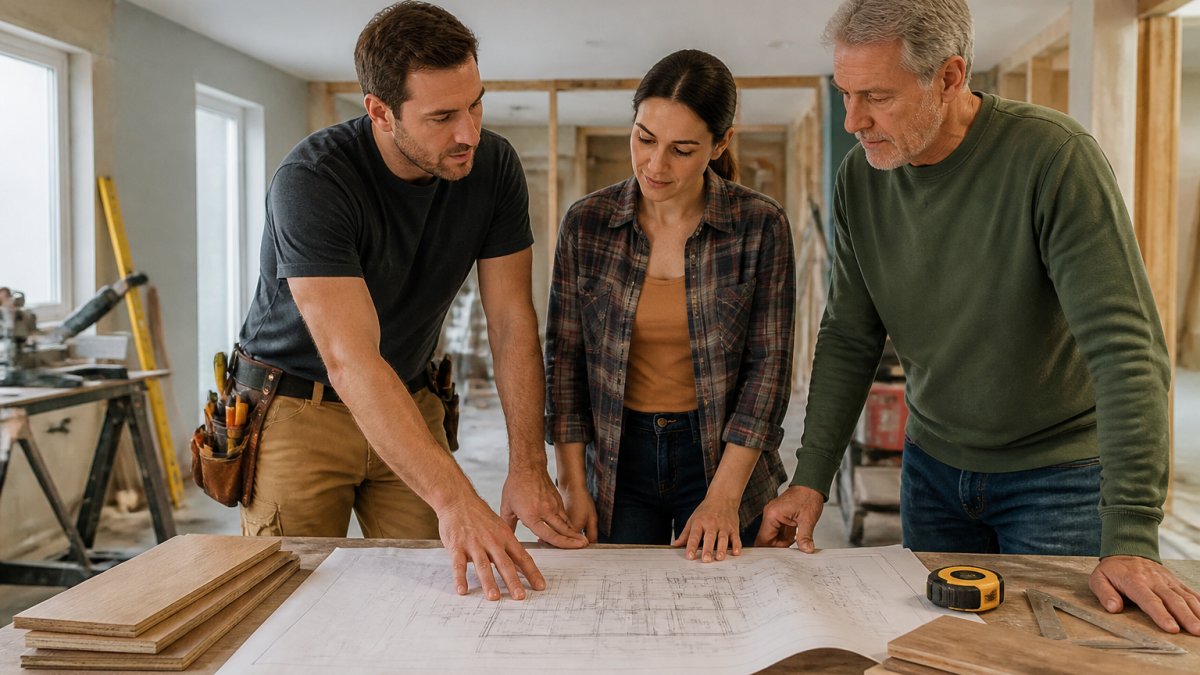
The renovation consultation is the meeting where a remodeling project is either set up to succeed or quietly set up to fail.
Most people treat the consultation as a sales pitch. It is not. It is a two-way interview, and you should be doing at least half the talking.
The core problem is simple. A contractor who answers vaguely in the consultation will run the job vaguely.
Questions to Ask a Contractor Before Remodeling
Before any walkthrough, ask the contractor directly about their track record, paperwork, and licensing. These questions to ask a contractor before remodeling separate a professional operation from a crew with a truck and a good line of talk.
Experience, Licensing and Insurance
Ask how many years they have been in business and how many projects like yours they have finished. A Red Seal certified contractor has completed a formal interprovincial trade certification, and you can ask to see proof. Then ask for their liability insurance and coverage for workers. Any hesitation on insurance is a stop sign.
- How long have you been in business under this name?
- Are you Red Seal certified, and can I see the certificate?
- What liability insurance do you carry, and can you send the certificate?
References, Portfolio and Similar Projects
Request three references from projects finished in the last two years, ideally of a similar size and scope. Ask to see photos of past work, not just finished glamour shots but mid-build photos. If you want a method to actually verify those references and past work, see our guide on how to check contractor references for renovations.
Your Renovation Consultation Checklist, Stage by Stage
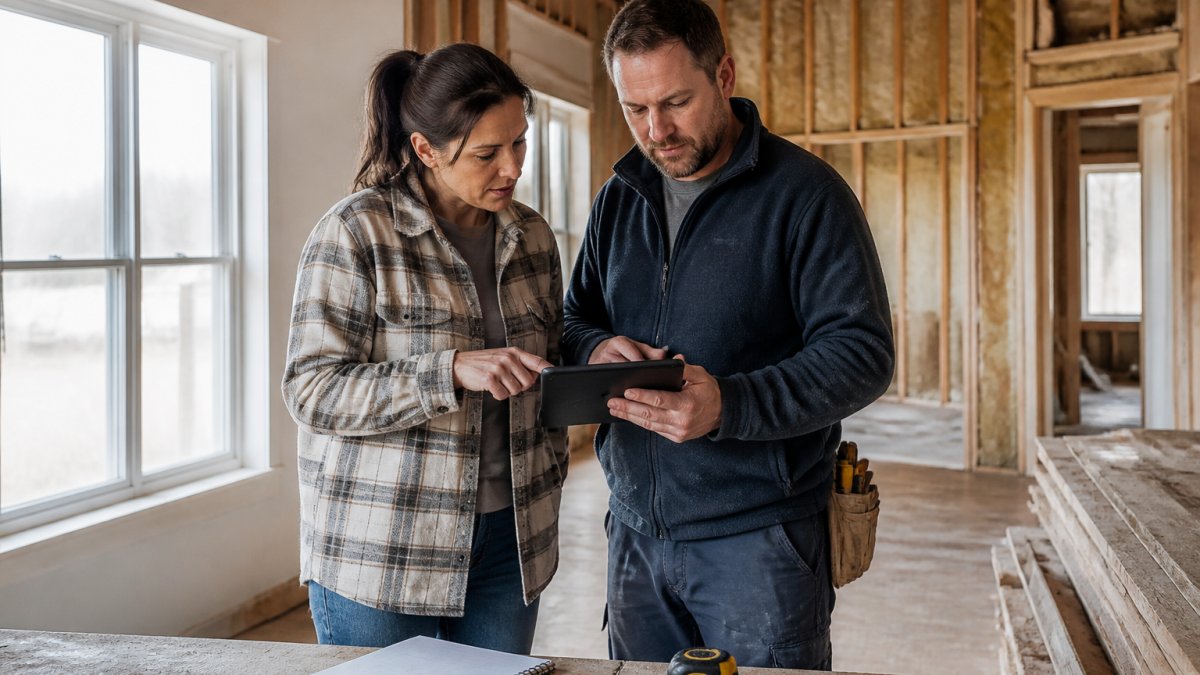
A renovation consultation checklist keeps the meeting focused and stops you from forgetting the one question that matters most. Most question lists floating around online are flat brain-dumps.
Stage 1: Before the Meeting (Pre-Consultation)
This stage is about screening out contractors who should never reach your kitchen table. Ask these by phone or email before anyone walks through your door.
- Are you licensed for the type of work this project involves, and what is your licence number?
- Can you send your certificate of liability insurance and proof of workers' coverage before we meet?
- How many projects of this size and type have you completed in the last two years?
If a contractor cannot answer these four or five questions in writing, the in-person consultation is unlikely to go better. For practical preparation steps, read how to prepare your home for a contractor walk-through.
Stage 2: During the Walkthrough (Planning and Scope)
This is the working part of the meeting. Walk the space together and ask the contractor to narrate what they see, room by room. The goal is to hear specifics, not reassurances.
- Where exactly do walls, floors, or fixtures come out, and what is behind them?
- How will plumbing, electrical, and HVAC be rerouted, and who does that work?
- What permits and inspections will this project require, and who pulls them?
Stage 3: After the Meeting (Proposal and Contract)
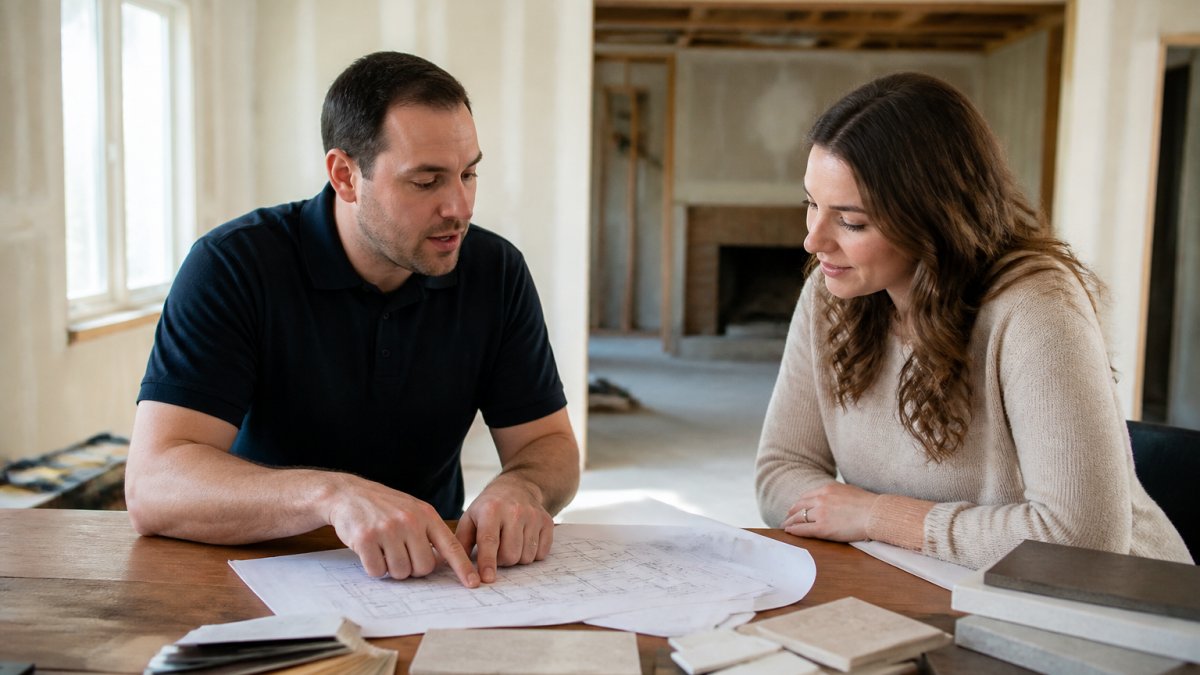
Send a short follow-up email summarizing what you heard and ask for written confirmation of each point. Then compare proposals side by side using the same categories: scope, exclusions, allowances, contingency, schedule, payment milestones, and warranty. A bid that omits a line another bid includes is not cheaper, it is incomplete.
- Does the written proposal match what was discussed in person?
- Are allowances realistic for the finishes we discussed, or placeholder numbers?
- What is the payment schedule, and how is each payment tied to completed work?
Stage 4: Closeout and Handover
Ask these before signing, so the end of the project is defined up front.
- What does the final walkthrough include, and who signs off?
- What is the process for fixing deficiencies found at handover?
- Will I receive as-built drawings, warranty documents, and maintenance instructions?
Used this way, the checklist becomes a comparison tool, not just a memory aid. Every contractor answers the same questions, in the same order, and you can see immediately who is specific and who is vague.
Scope, Budget and Cost Controls
The renovation consultation should end with a clear project scope and a realistic budget range, not a single number pulled from the air. Ask what is included and, more importantly, what is excluded. Ask how the contractor handles unexpected costs, change orders, and allowances for materials and product selection. To understand how to keep the agreed scope from expanding, read how to prevent renovation scope creep.
| Cost Control | Question to Ask | Why It Matters |
|---|---|---|
| Contingency | What contingency is built into the budget? | Covers surprises without a new loan |
| Change orders | How are change orders priced and approved? | Stops quiet scope creep |
| Allowances | What allowances are set for finishes? | Reveals the real final cost |
| Payment schedule | When are payments due? | Ties cash to completed work |
Renovation Project Timeline Questions
Timeline questions expose whether the contractor has a real plan or a hopeful guess. Ask how long the project will take, what the completion date is based on, and what could push it. Then ask about availability, the construction team, subcontractors, and how construction delays are handled. A contractor who cannot name their subs or explain the sequence is improvising.
Questions to Ask Before Signing a Renovation Contract
The questions to ask before signing a renovation contract are about the fine print: payment schedule, warranty on workmanship, and how disputes get resolved. Ask for the contract in writing and read it line by line. Confirm what happens if the project runs late, who holds the permits, and what the warranty actually covers. For a broader bank of hiring questions, see questions to ask before hiring a general contractor.
How to Compare Renovation Proposals Apples to Apples
Comparing proposals is where most homeowners get fooled, because a lower number often hides a thinner scope. Line up each quote against the same categories: scope, materials, allowances, timeline, and payment terms. If one bid omits a line another includes, the cheaper bid is not cheaper, it is incomplete. For a detailed framework, use our guide on how to compare renovation quotes from contractors.
Red Flags and How to Verify the Answers
Red flags in a renovation consultation are rarely dramatic. They are small evasions: no written contract, no insurance proof, pressure to sign today, references that never call back, or a bid far below the others with no explanation. The skill is not spotting them, it is knowing what to do next. Below is a practical verification playbook for the answers you are most likely to hear.
Vague Answers and How to Follow Up
When a contractor gives a general answer, do not accept it and move on. Ask a narrowing follow-up that forces a specific response.
- "We handle everything" becomes: "Which parts are done by your own crew, and which are subcontracted?"
- "We are fully insured" becomes: "Can you email the certificate of insurance today, and does it name workers' coverage separately from liability?"
- "We have lots of experience" becomes: "How many projects like this one have you completed in the last two years, and can I see two of them?"
A contractor who cannot or will not narrow a vague answer is telling you something useful. Treat it as data, not as rudeness.
Verifying Credentials and Insurance
Do not rely on a verbal confirmation. Ask for documents and check them.
- Request the certificate of insurance directly from the contractor's insurer or broker, not just a photocopy.
- Confirm the licence number matches the legal name on the contract, not a trade name.
- Ask for proof of workers' coverage separately from general liability; they protect different things.
Verifying References and Past Work
Three references from the last two years, matched to your project type, is the baseline. Then verify them properly.
- Call each reference and ask what went wrong, not just what went right. Every project has friction; how it was handled is the real signal.
- Ask the reference whether the final price matched the contract, and whether the timeline held.
- Ask to see mid-build photos, not just finished shots, for at least one past project.
Bids That Are Too Low or Too Fast
An unusually low bid is usually a scope problem, not a generosity problem. Compare the low bid line by line against the others and look for what is missing: permits, demolition, disposal, allowances, contingency, or finish carpentry.
Pressure to sign quickly is its own red flag. A contractor with a full pipeline does not need a same-day signature. Ask for 48 hours to review the contract and proposal, and watch how they respond.
Frequently Asked Questions
What should I expect during a home renovation consultation?
Expect a walkthrough of the space, a discussion of your goals, and questions about budget and timeline. The contractor should examine existing conditions, explain how they handle permits and building codes, and outline the planning and design process. A good renovation consultation ends with clear next steps: a written scope, an estimate range, and a date for the proposal. Bring measurements, inspiration photos, and a list of your own questions so the meeting produces answers rather than vague assurances.
How do I compare renovation contractor quotes fairly?
Line up the same scope items side by side: materials and product selection, allowances, labour, permits, and cleanup. A cheaper quote often excludes items another builder includes, so compare what is missing, not just the total. Ask each contractor to break costs into categories and state whether the estimate is fixed or subject to change. Check the payment schedule, warranty terms, and named subcontractors. Comparing three proposals on identical line items shows the real difference in price and quality.
What should be included in a renovation contract?
A renovation contract should name the project scope, materials and finishes, start and completion dates, payment schedule tied to milestones, and how change orders are priced and approved. It should identify the project manager and main point of contact, list permits and who pulls them, and state the warranty on workmanship. Also confirm insurance coverage and licensing details in writing. Read the allowances and contingencies closely, since those clauses decide how unexpected costs are handled.
How long does a home renovation consultation take?
Most consultations run 60 to 90 minutes, longer for complex projects involving structural work or energy efficiency upgrades. A walkthrough of a large home or a discussion of multiple rooms can stretch past two hours. The follow-up matters as much as the meeting: expect a written proposal within a week or two. Ask upfront how long the contractor takes to deliver an estimate so you can plan your decision and avoid holding up your project timeline.
A renovation consultation only works if the contractor answers with proof, not promises. At Timeless General Contracting, we bring 25 years of experience, Red Seal certification, and a real-time Client Project Portal so you can track your build and see progress as it happens. Get started with Timeless General Contracting and walk into your next consultation with clear answers and a contractor who backs them up.