 blog
blog
Questions to Ask Before Hiring a General Contractor
Table of Contents
- Essential Questions to Ask Before Hiring a General Contractor
- General Contractor Interview Questions That Reveal How They Work
- Your Contractor Hiring Checklist: What to Verify Before You Commit
- What to Ask a Contractor Before Signing a Contract
- How to Compare Contractor Quotes Without Getting Burned
- Red Flags, Scams, and Dispute Resolution
- Frequently Asked Questions
Last Updated: October 6, 2026
Essential Questions to Ask Before Hiring a General Contractor
Hiring a general contractor is the single most important decision in any custom build or major renovation.
A general contractor manages your entire project, from permits and scheduling to subcontractors and final inspection.
Background and Industry Experience
Start with how long they've been in business and what they've built.
- How many years have you been in business?
- What percentage of your work is custom builds versus renovations?
- Can you describe a project like mine that you completed recently?
Experience matters most when it matches your project type: a builder who excels at new custom homes may not fit a complex energy-efficiency retrofit.
Licensing, Insurance, and Bonding in Your Province
Ask for proof of licensing, general liability insurance, and workers' compensation coverage before any work starts.
- Can you provide your licence number and proof of coverage?
- What are your general liability limits?
- Are you covered for workers' compensation?
Request certificates directly and confirm them with the issuing body. Don't accept a verbal assurance. For guidance on what provincial regulators expect, check Canadian Centre for Occupational Health and Safety.
General Contractor Interview Questions That Reveal How They Work
Credentials get a contractor to the table; how they answer process questions tells you whether the build will go well. These contractor interview questions expose how they plan, communicate, and supervise.
Project Scope, Timeline, and Communication
Ask how they define the project scope, when they can start, and how they'll keep you updated. Vague answers mean vague schedules later.
- What's the estimated start date and completion date?
- How do you handle scheduling and availability?
- How often will you communicate progress?
At Timeless General Contracting, clients track every phase through our real-time Client Project Portal.
Subcontractors, Supervision, and Warranty
Ask who does the work and who supervises it. Many contractors bring in subcontractors for electrical, plumbing, and specialty work.
- Which parts of the job will you subcontract?
- How do you supervise subcontractors on site?
- What warranty do you offer, and how long does it last?
Get the warranty in writing, it protects you long after the final invoice.
Your Contractor Hiring Checklist: What to Verify Before You Commit
A contractor hiring checklist keeps you objective when you're excited about a design. Verify each item before you commit.
- Licence number confirmed with the issuing body
- General liability and workers' compensation certificates on file
- Portfolio of similar projects reviewed
References, Past Work, and Similar Projects
Ask for references from projects like yours and actually call them. Ask whether the contractor stayed on schedule, handled problems well, and respected the budget.
- Can I see photos of similar projects?
- Can I speak with two or three recent clients?
- Did any project go over budget, and why?
Building Permits and Inspections
Ask who pulls the building permits and schedules inspections. A professional contractor handles this and builds it into the timeline.
- Will you obtain all building permits?
- How do you schedule inspections?
- What happens if work fails an inspection?
Skipped permits can void your insurance and force you to tear out finished work. Confirm the contractor handles permits before signing. For more on how municipal permitting works, see Government of Canada building and renovation guidance.
What to Ask a Contractor Before Signing a Contract
The contract is where good intentions become enforceable terms. The real work is knowing which clauses to demand, what a defensible deposit looks like, and how changes and exits get handled.
What a Written Contract Should Specify
A residential construction contract should be a complete description of the deal, not a one-page quote. Before you sign, confirm it addresses each of the following:
- Scope of work, a line-item description of what is being built, removed, or replaced, including quantities and locations.
- Materials and finishes, brand, model, grade, or an allowance figure where the exact product is not yet chosen.
- Schedule, a start date, substantial completion date, and any milestone dates that trigger payment.
If any are missing, ask for them in writing before signing. A contractor who resists adding standard clauses is telling you something.
Deposits and Payment Schedules
Deposit rules vary by province, and some cap how much a contractor can collect before work begins. Ask directly:
- What is the deposit, and what specifically does it cover, materials, mobilization, or both?
- Is the deposit held in trust, or does it go straight into general operating funds?
- How is the payment schedule structured, and what milestones trigger each payment?
Change Orders and Unexpected Work
Unexpected work is normal in renovation, but surprise invoices are not. Ask how change orders are handled before they happen:
- How do you document change orders, written form, email, or both?
- Will I approve changes in writing before work continues?
- How do you price unexpected work, time and materials, a fixed add-on, or a percentage markup?
Every change order should be written, priced, and signed before work proceeds. Verbal approvals are the most common source of end-of-project disputes.
Termination and Exit Terms
Ask what happens if the relationship breaks down mid-project. A fair contract spells out:
- The notice period required to terminate.
- How completed work, stored materials, and unpaid invoices are handled at termination.
- Whether the contractor must provide lien waivers or a release of claims as a condition of final payment.
Project Closeout and Final Payment
The last payment is your strongest leverage, so treat closeout as a formal stage. Before releasing final payment, confirm:
- A punch list has been completed and signed off by you.
- Final inspections have passed and you have copies of the inspection reports.
- You have received lien waivers or a statutory declaration confirming subcontractors and suppliers have been paid.
Hold back 5 to 10 percent of the contract price until the punch list is complete and lien waivers are in hand, this protects you if a subcontractor later claims they were not paid.
How to Compare Contractor Quotes Without Getting Burned
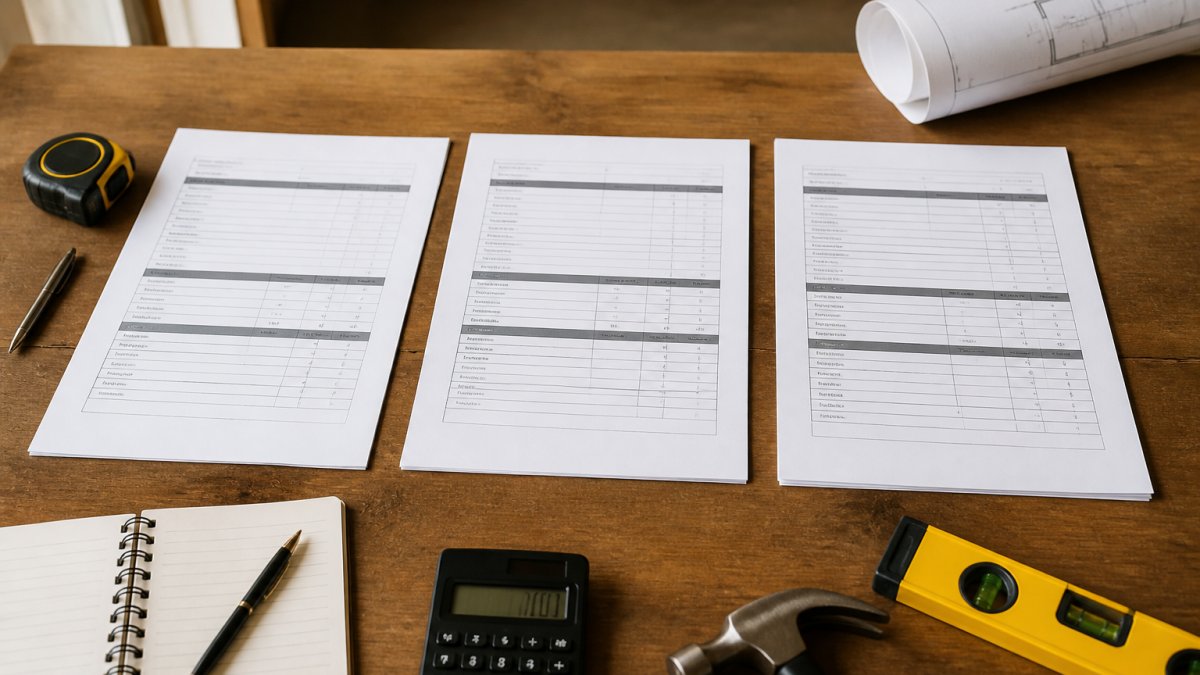
The lowest quote is rarely the cheapest project. Compare contractor quotes on scope, terms, and risk, not just the bottom line.
Fixed-Price vs. Cost-Plus Estimates
A fixed-price estimate locks in a total for a defined scope. A cost-plus estimate charges actual costs plus a set fee. Fixed-price gives you budget certainty. Cost-plus can suit projects with unknown conditions.
| Estimate Type | Best For | Budget Certainty | Risk |
|---|---|---|---|
| Fixed-price | Defined scope, custom builds | High | Contractor absorbs overruns |
| Cost-plus | Unknown conditions, complex retrofits | Low | Owner absorbs overruns |
Budget Contingencies and Cost Overruns
Set aside a contingency for unexpected work, such as hidden water damage or structural repairs.
- Ask what percentage of the budget typically covers surprises.
- Confirm how overruns get approved.
- Keep your contingency separate from the contract price.
Red Flags, Scams, and Dispute Resolution
A bullet list of red flags is not enough. You need a verification process you can actually run, an understanding of how contractor scams work, and a plan for disputes.
How to Verify Credentials Step by Step
Do not accept a licence number written on a business card. Verify it yourself:
- Licence, Look up the contractor's licence with the provincial or territorial regulator that issues it. Confirm the name on the licence matches the name on the contract and the name on the insurance certificate.
- Insurance, Ask for a certificate of insurance showing general liability coverage and the policy expiry date. Call the insurer to confirm the policy is active and that the coverage amount is adequate for your project.
- Workers' compensation, Ask for a clearance letter or account in good standing from the provincial workers' compensation board. This confirms the contractor is registered and current on premiums. If a worker is injured on your property and the contractor is not covered, you can be exposed to liability.
- Bonding, Ask what type of bond is in place (performance, labour and material, or both) and request proof from the bonding company.
- References, Ask for three references from projects similar to yours completed in the last two years. Call each one. Ask whether the project stayed on schedule, whether the budget held, how problems were handled, and whether they would hire the contractor again.
- Complaint records, Check with the provincial consumer protection office, the Better Business Bureau, and any local home builder association for complaints or disciplinary actions.
Common Contractor Scams and Warning Signs
Scams follow recognizable patterns. Watch for:
- Large upfront cash demands, A request for a substantial portion of the project cost in cash before any work begins is the single most common scam signal. Legitimate deposits are typically modest and tied to materials or mobilization.
- No written contract or estimate, If the contractor will not put the scope, price, and schedule in writing, walk away.
- Requests to pay a subcontractor directly, This can bypass the general contractor's responsibility and complicate lien positions.
Mechanic's Liens and Your Legal Protections
A mechanic's lien lets unpaid subcontractors or suppliers claim against your property, even if you already paid the general contractor. Protect yourself by:
- Requesting lien waivers from the general contractor and from major subcontractors and suppliers as payments are made.
- Confirming that subcontractors and suppliers have been paid before releasing final payment.
- Keeping a holdback, commonly 10 percent in many provinces, for the period allowed under provincial lien legislation.
For how liens work in your province, consult Canadian legal information on construction liens.
Resolving Disputes Before They Escalate
If a problem arises, address it in writing immediately. Send a dated email or letter describing the issue, referencing the contract clause involved, and stating the resolution you seek.
If informal resolution fails, check whether your contract requires mediation or arbitration before litigation. Many provincial consumer protection regimes also offer complaint processes for renovation disputes.
Frequently Asked Questions
What should I ask a general contractor about their experience?
Ask how many years they have been in business, whether they have completed projects similar to yours, and if they can provide references from those jobs. A contractor with 25 years of experience and Red Seal certification, like Timeless General Contracting, can show you a portfolio of past work. Request specific examples of projects that match your scope, and follow up with the references to confirm quality and reliability.
What are red flags when hiring a general contractor?
Watch for contractors who demand a large deposit upfront, refuse to provide a written contract, or cannot supply proof of licensing and insurance. Other warning signs include pressure to sign quickly, no local address, and unwillingness to share references. If a contractor avoids answering questions about permits, timelines, or change orders, treat it as a serious concern and look elsewhere.
How do I compare quotes from general contractors?
Compare quotes line by line to ensure they cover the same scope of work, materials, and labor. Look for a detailed written estimate that breaks down costs and specifies whether it is fixed-price or cost-plus. Check what is excluded, such as permits or cleanup. The lowest quote is not always the best; consider the contractor's experience, insurance, and communication style before deciding.
What should a contractor provide before I hire them?
Before hiring, ask for a copy of their license, certificate of insurance for general liability and workers' compensation, and a bonding statement. They should also provide a written contract with a payment schedule, project timeline, and warranty terms. A contractor hiring checklist helps you verify these items. In Canada, ensure they comply with provincial building codes and can pull the necessary permits for your project.
Hiring the right contractor comes down to verification, clear terms, and honest communication. At Timeless General Contracting, we back our work with 25 years of experience, Red Seal certification, and a real-time Client Project Portal that keeps you informed at every stage. Get started with Timeless General Contracting and build with a team that shows its credentials and tracks your project in the open.