 how-to
Avoid Construction Delays in Rural Areas: 7 Steps
Table of Contents
- Why Construction Delays in Rural Areas Are Different
- Step 1: Plan Your Project Lifecycle and Critical Path
- Step 2: Understand Construction Permit Timelines and Regulatory Compliance
- Step 3: Master Managing Rural Construction Logistics
- Step 4: Secure Procurement Lead Times and Manage Supply Chain Disruption
- Step 5: What Is a Red Seal Contractor and Why They Prevent Delays
- Step 6: How to Track Construction Progress in Real-Time
- Step 7: Establish Stakeholder Communication and Contingency Planning
Last Updated: August 22, 2026
Why Construction Delays in Rural Areas Are Different
Construction delays in rural areas follow fundamentally different rules than urban projects. At Timeless General Contracting, we've spent 25 years navigating the unique challenges that plague rural builds. The core issue is infrastructure scarcity: rural sites lack established supply chains, permitting infrastructure, and equipment access that urban contractors take for granted. A concrete truck arriving in 30 minutes in the city might require a 90-minute round trip from the nearest batch plant. A permit taking two weeks in a municipal office can take six weeks in a rural county office. What separates successful rural builds from delayed ones isn't heroic effort, it's anticipation. You must plan the project lifecycle with explicit attention to logistics, regulatory timelines, and supply chain realities that urban projects simply don't face.
Step 1: Plan Your Project Lifecycle and Critical Path
The biggest mistake in rural construction is treating the project lifecycle like an urban build and hoping logistics will sort themselves out. They won't.
Start by mapping your critical path method with rural-specific constraints baked in from day one. Your critical path identifies which tasks directly impact your completion date and which ones have flexibility. In rural environments, this means explicitly accounting for procurement lead times that don't exist in cities.
Here's what this looks like in practice:
- List all major tasks in sequence: site mobilization, foundation work, framing, mechanicals, finishes
- Add rural-specific buffers to each task: add 15-20% extra time for equipment delivery, weather delays on unpaved access roads, and subcontractor travel time
- Identify your longest chain of dependent tasks, this is your critical path
- Flag procurement items that must be ordered months in advance: custom windows, specialty materials, structural steel
- Build in contingency planning for unforeseen site conditions, geotechnical surprises, soil testing delays, or environmental impact assessments
Rural projects typically need 20-30% more contingency time than equivalent urban builds, not because rural contractors are slower, but because the project lifecycle includes steps that simply take longer when infrastructure is distant (pmi.org).
Step 2: Understand Construction Permit Timelines and Regulatory Compliance
Regulatory compliance in rural areas operates on a different calendar than urban permitting. This is where most delays originate.
Rural municipalities often handle building permits through county or regional offices with smaller staff. A permit taking 10 business days in a city might take 30-45 days in a rural jurisdiction (icma.org). Add environmental impact assessments, soil testing requirements, or zoning ordinance reviews, and you're looking at 60-90 days before you break ground.
Here's how to navigate this:
- Contact your local authority 8-12 weeks before you plan to break ground
- Request a pre-submission meeting with the permitting officer to identify what's required for your specific site
- Ask explicitly about environmental assessments: soil testing, geotechnical investigation, septic system design review
- Clarify zoning ordinances that might affect your build: setbacks, lot coverage, height restrictions
- Identify which permits must be sequential versus parallel
- Budget time for revisions, permit applications often come back with requests for additional information
The real time killer isn't the permit itself; it's discovering halfway through your application that you're missing a critical document. A soil testing report that takes 4 weeks to generate becomes a 12-week delay if you don't request it until after your permit is rejected.
Step 3: Master Managing Rural Construction Logistics
Rural construction logistics is where most delays become visible, even though they were created weeks earlier during planning.
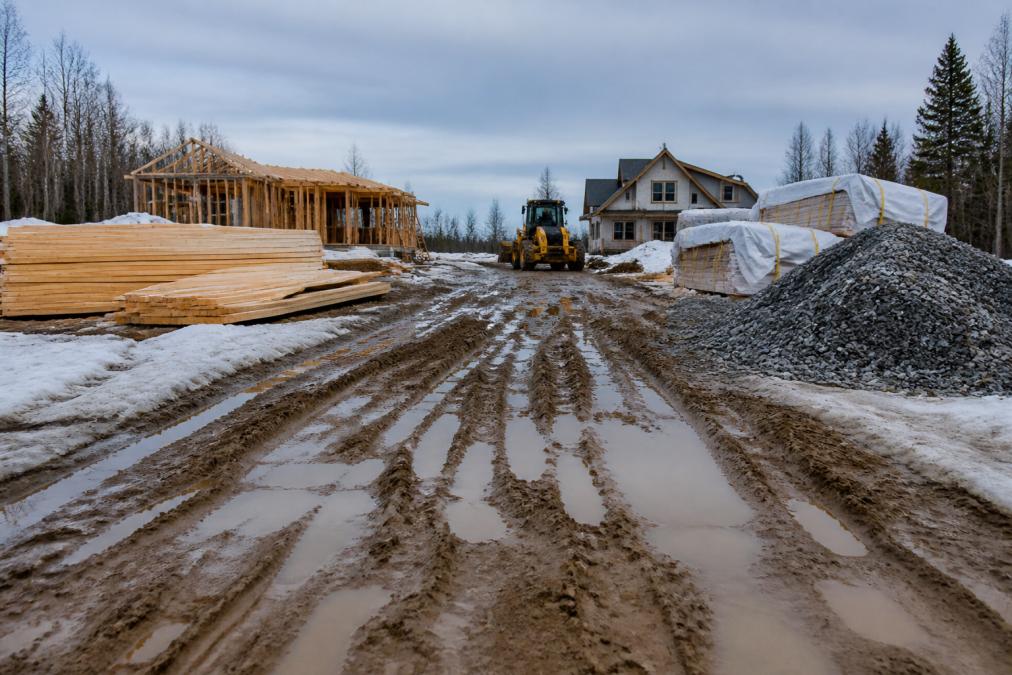
Managing rural construction logistics means treating equipment delivery, material staging, and subcontractor access as critical project tasks, not afterthoughts. Your site mobilization phase must account for the physical reality that everything arrives from somewhere else.
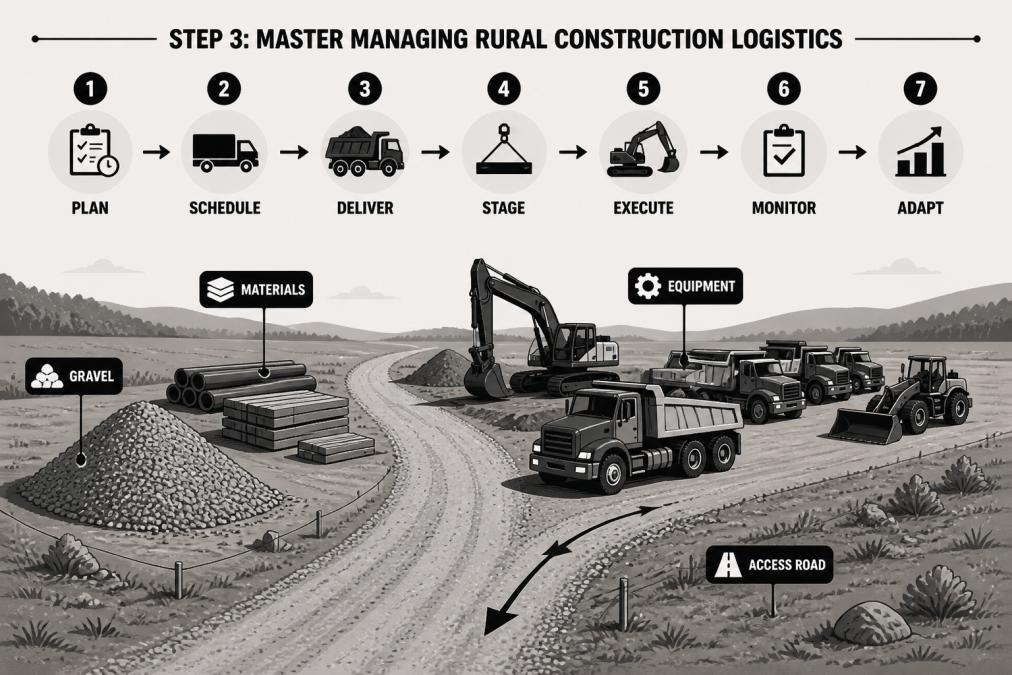
Here's the framework:
- Map your access routes before you need them: Which roads can handle loaded concrete trucks? What's your backup if the primary route becomes impassable?
- Establish equipment staging areas on-site: Where will the excavator sit between jobs? Where do you stockpile materials?
- Coordinate delivery windows with suppliers: A single missed delivery window means another week waiting
- Plan for material storage that protects against weather: Lumber needs covering, concrete needs protection from rain
- Account for subcontractor travel time in your scheduling: A plumber traveling 45 minutes each way needs different scheduling than one 10 minutes away
The thing nobody tells you about rural logistics is that it compounds. A one-day delay in equipment delivery cascades into a two-day delay because the next subcontractor can't start their work.
Step 4: Secure Procurement Lead Times and Manage Supply Chain Disruption
Procurement lead times are the silent killer of rural construction schedules. A supply chain disruption that costs a city project two weeks can cost a rural project two months because you have fewer alternative suppliers.
Managing supply chain disruption starts with understanding what you actually need and when. Just-in-time ordering works when suppliers are 20 minutes away. In rural areas, just-in-time becomes just-too-late.
Here's your procurement strategy:
- Identify long-lead items immediately: Custom windows, doors, structural steel, mechanical equipment, anything requiring 6+ weeks to manufacture
- Order these items before your permits are finalized if possible, or immediately upon permit approval
- Build relationships with 2-3 suppliers for critical materials, not one
- Request written delivery dates in your purchase orders, not "approximately 8 weeks"
- Create a material delivery schedule that staggers arrivals to match your construction sequence
- Maintain a contingency inventory of common items: fasteners, lumber, drywall, paint
The real use in managing supply chain disruption is ordering before you're certain you need it. The cost of storing extra materials for two weeks is trivial compared to the cost of stopping your entire crew because one component didn't arrive.
Step 5: What Is a Red Seal Contractor and Why They Prevent Delays
A Red Seal contractor is a tradesperson who has achieved interprovincial certification through the Red Seal Program, which means they've met standardized training and competency requirements recognized across Canada. This matters for rural construction because it signals genuine expertise and reduces the risk of rework and delays caused by subcontractor error.
Why do Red Seal contractors prevent delays? Because they execute work correctly the first time. A framing error that a non-certified carpenter might miss becomes a structural problem that stops your project for weeks. Electrical work that doesn't meet code gets flagged during inspection and must be torn out and redone.
Here's what to verify:
- Ask for Red Seal certification when hiring trades
- Verify the credential through the Red Seal Program database
- Recognize that Red Seal trades typically charge more because they carry liability and maintain standards, this is insurance against delays
Timeless General Contracting maintains Red Seal certification across our core trades.
Step 6: How to Track Construction Progress in Real-Time
How to track construction progress in real-time is the difference between knowing you're behind schedule when you can still recover and discovering the delay at completion when it's too late to fix.
Real-time visibility into your project requires a system that captures progress daily, not weekly or monthly. This means digital tools that your contractor is actually using.

Here's what effective real-time tracking looks like:
- Daily photo documentation of the site
- Task completion logging that shows which milestones are on schedule and which are slipping
- Material delivery tracking that confirms when supplies actually arrive
- Subcontractor sign-in records that show who's on-site and when
- Issue logging that captures problems immediately
- Schedule variance reporting that shows which tasks are ahead or behind and why
The Client Project Portal that Timeless General Contracting uses gives homeowners access to this data in real-time. You can see progress photos, check task completion status, and review the timeline without waiting for a monthly report. Verify that your contractor is committed to daily updates before you sign the contract.
Step 7: Establish Stakeholder Communication and Contingency Planning
Stakeholder communication is the safety net that catches problems before they become delays. Contingency planning is what you do when problems slip through the net anyway.
Effective stakeholder communication in rural construction means establishing clear channels and schedules before the project starts. You need agreement on how often you'll communicate, what information gets shared, and how decisions get made when unexpected issues arise.
Here's the framework:
- Weekly progress calls with your contractor to review what happened last week and what's planned for next week
- Explicit escalation paths for problems: If the concrete supplier can't deliver as promised, who decides whether to delay the schedule?
- Written decisions on scope changes, with timeline and cost impact documented
- Regular site visits by you or your project manager, don't rely entirely on contractor communication
- Clear contingency triggers: What happens if soil testing reveals unexpected conditions? What's your plan?
Your contingency plan should address schedule contingency (15-20% additional time for rural projects), budget contingency (10-15% additional funds), supplier contingency (backup sources for critical materials), and subcontractor contingency (backup trades if your primary choice becomes unavailable).
Construction delays in rural areas aren't inevitable, they're predictable, and predictable problems can be prevented. The steps above address the specific challenges that plague rural builds: infrastructure distance, regulatory complexity, supply chain constraints, and logistics coordination.
If you're planning a custom home build or high-performance renovation in a rural area, the difference between a successful project and a delayed one comes down to whether you've anticipated these challenges or discovered them mid-build. Timeless General Contracting has spent 25 years solving these exact problems, and our Client Project Portal ensures you have real-time visibility into progress every step of the way. Get started with a consultation to see how we approach rural construction planning with the transparency and expertise your project deserves.
Frequently Asked Questions
What are the most common causes of construction delays in rural areas?
Rural construction delays stem from unique challenges: limited access roads requiring equipment logistics planning, longer procurement lead times for specialized materials, unpredictable weather affecting site mobilization, permit acquisition delays from smaller local government offices, lack of municipal infrastructure like utilities, soil testing and geotechnical assessments revealing unforeseen site conditions, and difficulty coordinating subcontractors over distance. Supply chain disruption hits harder in rural locations. A Red Seal contractor understands these regional variables and builds realistic contingency planning into the project lifecycle.
How do I know a contractor is actually Red Seal certified, and why does that matter for avoiding delays?
Red Seal certification is a federal interprovincial standard managed by Red Seal, confirming a contractor has passed rigorous technical and safety exams. You can verify certification through the Red Seal website or ask your contractor for proof. Red Seal contractors prevent delays because they follow standardized best practices, understand regulatory compliance across regions, manage resource allocation efficiently, and have documented expertise in structural inspection and site conditions assessment. This formal qualification reduces project mismanagement and schedule variance.
How long does the permit acquisition process typically take in rural areas?
Construction permit timelines vary by local jurisdiction, but rural areas often face longer waits than urban centres. Permit acquisition can range from 4 to 12 weeks depending on project complexity, zoning ordinances, environmental impact assessment requirements, and local government capacity. Rural municipalities may have fewer staff reviewing applications. Working with a contractor experienced in local government navigation and submitting complete applications with structural inspection documentation upfront reduces delays. Starting the permitting process early is critical to your project milestones.
What should I look for in real-time project tracking to stay informed without being intrusive?
Effective real-time progress tracking should show project milestones, schedule variance alerts, resource allocation updates, and budget status without requiring daily manual reports. The best systems offer mobile access so you can check progress anytime, provide transparency on unforeseen site conditions as they arise, flag permit or supply chain issues before they impact your timeline, and allow two-way communication with your contractor. This visibility reduces project mismanagement and gives you confidence that your build stays on schedule while respecting your contractor's workflow.
This article was written using GrandRanker