 how-to
Luxury Kitchen Remodel: What Happens Step by Step
Table of Contents
- Planning and Discovery: The First Phase of a Luxury Kitchen Remodel
- Budgeting for High-End Renovations and Material Selection
- What Is a Red Seal Contractor and Why It Matters for Your Remodel
- The Luxury Kitchen Renovation Timeline: From Demo to Drywall
- Managing Residential Renovation Projects Without the Chaos
- Lighting Layers, Smart Home Integration and Final Finishes
- After the Remodel: Maintenance, Resale Value and Temporary Kitchen Solutions
- Frequently Asked Questions
Last Updated: September 13, 2026
Planning and Discovery: The First Phase of a Luxury Kitchen Remodel
A luxury kitchen remodel begins long before demolition day, with a planning phase that determines whether the project runs smoothly or spirals into costly delays. The projects which go smoothly share one trait: they invest real time in discovery before anyone picks up a hammer. The work done in this phase sets the budget, the schedule, and the technical specifications every trade will follow.
Planning a luxury kitchen remodel means translating how you actually live into a buildable plan. Do you cook for a crowd, or is the kitchen mostly a gathering space? That answer changes everything about the conceptual layout.
Conceptual Layout and Space Planning
Designers start with a conceptual layout that maps the work triangle, sightlines, and traffic flow. Space planning at this level considers where the island sits relative to the range, how far the fridge is from the prep counter, and whether the room supports the ergonomic design you'll want for the next twenty years.
A common mistake is treating layout as a purely aesthetic exercise. In practice, a beautiful kitchen that forces you to walk six steps between the sink and the stove will frustrate you daily. Lifestyle-focused design starts with movement, then applies the luxury aesthetic on top.
Budgeting for High-End Renovations and Material Selection
Budgeting for a high-end renovation is not about picking a number and forcing the design to fit. It's about deciding early which elements justify their cost and which are negotiable.
High-end finishes, custom countertops, and premium appliances carry very different price tags depending on material and specification. Because pricing depends heavily on scope, material selection, and site conditions, we recommend getting a detailed quote rather than working from ballpark figures. Material sourcing for bespoke cabinetry and stone often has long lead times, so those decisions need to happen early.
The practical move: set your budget, then rank your priorities. If the range matters most, protect that line item and economize elsewhere.
What Is a Red Seal Contractor and Why It Matters for Your Remodel
A Red Seal contractor is a tradesperson who has passed the Interprovincial Standards Red Seal examination, certifying they meet a national standard of competency in their trade (red-seal.ca). For homeowners, that certification is a verifiable signal of skill rather than a claim on a business card.
You can confirm Red Seal certification independently through the Red Seal Program, which maintains the national occupational standards for skilled trades. That matters because renovation work involves structural modifications, rough electrical, and plumbing rough-in, all areas where an unqualified crew can create expensive problems.
The Luxury Kitchen Renovation Timeline: From Demo to Drywall
A luxury kitchen renovation timeline typically runs from several weeks to several months, and the variable that moves it most is not labor speed, it is the gap between when a decision must be made and when the material can actually arrive. The sequence below is the order trades work in, but the real schedule is driven by long-lead items ordered during planning.
Phase 1: Protection, Demo and Disposal
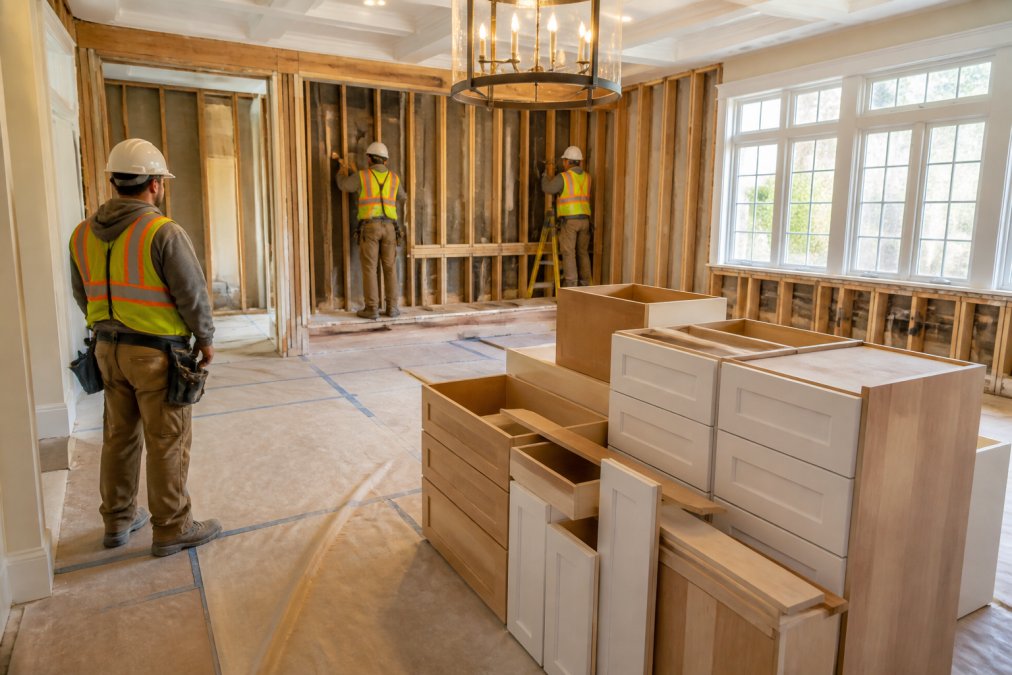
Demo is not the first step, protection is. Crews seal off adjacent rooms with zip walls and negative air pressure to contain dust, lay rigid floor protection over finished surfaces, and photograph existing conditions before anything comes down. In a luxury home, this phase also includes salvaging anything worth keeping: a stone slab that can be recut, a light fixture being relocated, or appliances headed to a secondary kitchen.
Disposal is a scheduling item, not an afterthought. Cabinets, countertops, and drywall generate significant volume, and in many municipalities disposal requires a permit or a booked bin. Confirm the disposal plan before demo day so debris does not sit in the driveway for a week.
Phase 2: Structural Modifications and Rough-Ins
If walls move, this is when it happens. A structural engineer may need to review a beam or header, and that review has to happen before framing closes. Once framing is complete, rough electrical and plumbing rough-in run inside the open walls: new circuits for induction or a dual-fuel range, dedicated lines for a panel-ready refrigerator, drain and supply relocation for a moved sink, and gas lines if applicable.
This is the phase where inspections pause the job. Rough-in inspection must pass before insulation and drywall go up, and inspection scheduling can add days to the calendar. Build that hold into the schedule rather than treating it as slack.
Phase 3: Insulation, Drywall and Paint
After inspection, walls close up. Drywall is hung, taped, and sanded, then primed and painted. Paint must cure before cabinetry is installed, and in humid conditions that cure time is longer than most homeowners expect. Skipping it traps moisture behind cabinets and can cause finish problems later.
Phase 4: Cabinetry, Countertops and Appliance Integration
Cabinetry goes in first, then countertops are templated, not measured, templated, against the installed cabinets. Templating is a physical process that produces a digital or physical pattern, and it happens after cabinets are set, not before. Stone fabrication then takes time, and the install is a separate visit.
Appliance integration is the coordination bottleneck. Panel-ready refrigerators, integrated dishwashers, and concealed ventilation require the cabinetmaker and the electrician to work from the same specification sheet. If the panel dimensions and the appliance cutout disagree, the fix is a new panel, not an adjustment.
| Phase | Typical Sequence | Watch For |
|---|---|---|
| Protection and demo | First | Disposal permit, salvage plan, dust containment |
| Structural and rough-ins | After demo | Engineering review, inspection hold |
| Insulation, drywall, paint | After rough-in inspection | Cure time before cabinetry |
| Cabinetry and countertops | After paint | Templating lead time, slab fabrication |
| Appliance integration | Final fit | Panel alignment, ventilation clearance |
| Punch list and final inspection | Last | Electrical sign-off, touch-ups |
Lead Times Drive the Calendar
Custom cabinetry, natural stone slabs, and imported appliances are the three items that most often extend a luxury timeline. Cabinetry is built to order, stone is quarried and fabricated to a template, and specialty appliances may ship from overseas. The practical rule is that these selections must be finalized during planning, not during construction, or the project stalls waiting on materials while trades stand idle.
Managing Residential Renovation Projects Without the Chaos
Managing residential renovation projects comes down to coordination and communication. Trades coordination is where most projects lose time: the electrician waits on the cabinetmaker, the plumber waits on the countertop template, and the schedule slips a week.
Transparent project management fixes most of this. We track each build in real time through a Client Project Portal, so clients can check progress from their phone instead of waiting for a callback. A common mistake is assuming your contractor will keep you updated; in practice, you should confirm exactly how and when updates will be shared before work starts.
Lighting Layers, Smart Home Integration and Final Finishes
Lighting design in a luxury kitchen uses layers: ambient overhead, task lighting over counters, and accent lighting inside cabinets or under the island. Getting the layers right changes how the whole room feels, and it has to be planned during rough electrical, not after drywall.
Smart home integration fits into the same phase. Under-cabinet sensors, app-controlled dimming, and integrated charging all need wiring planned in advance. Backsplash design and cabinetry hardware are the finishing touches that pull the room together, but they're chosen long before installation.
After the Remodel: Maintenance, Resale Value and Temporary Kitchen Solutions
Most guides end at the final walkthrough. The decisions that determine whether a luxury kitchen still looks and functions like new in five years, and whether it holds value, happen after the last trade leaves. This section covers the three things competitors skip: how to maintain high-end finishes, which upgrades actually return value, and how to live through the build.
Maintaining High-End Finishes
Natural stone countertops are porous. Marble, limestone, and some granites need periodic sealing, and acidic foods, citrus, vinegar, wine, etch marble on contact. A sealer does not make stone stain-proof; it buys time to wipe a spill. Quartz and sintered surfaces are non-porous and need less sealing, but they can still be damaged by heat, so trivets matter.
Custom wood cabinetry responds to humidity. In dry winter air, doors and drawer fronts can shrink and reveal gaps; in humid summers, they can swell and bind. A whole-home humidity target in the 35-50% range protects both cabinetry and hardwood flooring (nrcan.gc.ca). Oiled or lacquered finishes may need periodic reapplication depending on the product, so keep the original finish specification on file.
Smart appliances and integrated ventilation have filters and consumables: range hood grease filters, dishwasher filters, refrigerator water filters, and ventilation make-up air components. Replacing them on schedule protects both performance and warranty coverage.
Resale Value vs. Personalization
The honest answer is that not every luxury feature recoups its cost. Highly personalized choices, a bold tile pattern, a built-in for a specific appliance, a layout designed around one cook's workflow, appeal to a narrow pool of future buyers. Features that tend to hold broader appeal include durable, neutral surfaces, well-planned storage, quality lighting, and energy-efficient appliances.
A practical approach is to keep the bones neutral and put personality in the finishes. Cabinetry profile, countertop material, and layout are expensive to change later; hardware, paint, and backsplash are not. If resale is a consideration, invest in the elements that are hard to alter and express taste in the ones that are easy to swap.
Sustainable Luxury
Durability is the most underrated sustainability feature. A stone countertop or solid wood cabinet that lasts decades avoids the embodied energy of replacement. Beyond that, energy-efficient appliances, LED lighting on dimmers, and properly sized ventilation reduce operating cost without compromising the finish level. Buyers increasingly ask about efficiency, and documentation, appliance energy ratings, insulation values, lighting specifications, supports the value story at resale.
Temporary Kitchen Solutions
A luxury remodel can take months, and eating out for that long is neither practical nor pleasant. Set up a temporary kitchen before demo starts, not after. A workable setup includes:
- A microwave and a countertop induction burner or hot plate
- A mini-fridge or a full-size refrigerator relocated to a garage or basement
- A utility sink or laundry sink for washing up
- A folding table for prep and a storage bin for the dishes you actually use
- Paper plates and disposable cutlery for the heaviest weeks
Plan the temporary setup around the same circuits and water lines the crew will not be touching. Confirm with your contractor which outlets and fixtures stay live during each phase, and mark them so nobody disconnects them by mistake.
Frequently Asked Questions
What comes first in a luxury kitchen remodel?
Planning and discovery come first. Before any demolition starts, you need a conceptual layout, a realistic budget, and a clear scope of work. A Red Seal contractor will walk through the space, discuss how you actually use your kitchen, and produce technical specifications. Skipping this phase is the most common reason luxury kitchen remodels go over budget and past deadline.
How long does a high-end kitchen renovation typically take?
A luxury kitchen renovation timeline usually runs several months from design sign-off to final walkthrough. Custom cabinetry and premium appliances carry the longest lead times, often many weeks. The construction phase itself moves through demo, rough electrical and plumbing rough-in, drywall installation, cabinetry, countertops, backsplash design, and lighting. Your contractor should give you a phase-by-phase schedule before work begins.
Why should you hire a Red Seal contractor for a luxury remodel?
A Red Seal contractor has passed a national trade certification exam and met the hours required in their trade. That matters on a luxury kitchen remodel because structural modifications, rough electrical, and plumbing rough-in all need to meet local building codes. Red Seal certification is proof of verified skill, not a marketing claim. Ask to see the certification number and confirm it directly.
How do I track progress during a custom kitchen renovation?
Ask your contractor how they communicate updates before you sign. We use a client project portal that shows real-time progress, photos, and upcoming milestones you can check from your phone. If a contractor promises regular updates but cannot show you the system, that is a red flag. Get the update schedule in writing so you are not left waiting weeks for news.
A luxury kitchen remodel is a complex, multi-phase project, and the difference between a smooth build and a stressful one usually comes down to planning and communication. Timeless General Contracting brings 25 years of industry experience, Red Seal certification, and a real-time Client Project Portal that keeps you informed at every stage. Get started with Timeless General Contracting and build a kitchen that works for the way you actually live.