 how-to
Is a Home Energy Audit Worth the Cost? A 2026 Guide
Table of Contents
- What a Home Energy Audit Actually Delivers
- Home Energy Audit Cost: What Drives the Price
- Home Energy Audit Payback Period: The Math That Decides It
- When an Audit Is Not Worth the Cost
- DIY Home Energy Audit Checklist for a First-Pass Inspection
- Home Energy Audit Recommendations, Ranked by Cost and Impact
- Rebates and the Uncertainty in Every Savings Estimate
- Conclusion: Making the Call
- Frequently Asked Questions
Last Updated: October 14, 2026
What a Home Energy Audit Actually Delivers
A home energy audit is a room-by-room inspection that finds where your house loses heat, wastes power, and costs you money.
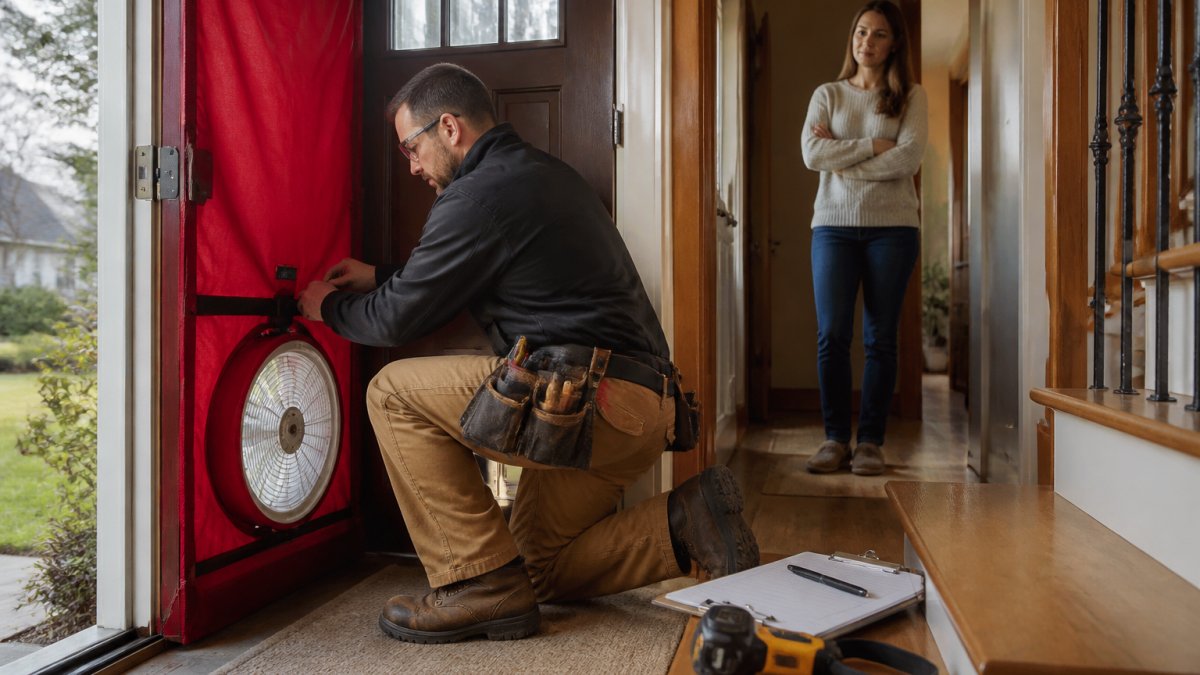
A home energy audit is a professional assessment of how a house uses and loses energy, combining visual inspection, air-leak testing, and thermal imaging to produce a prioritized list of upgrades. The audit answers one question: where is your money escaping?
Assessment Scope and the Report You Receive
A thorough assessment covers the building envelope, insulation levels, windows and doors, the heating and cooling system, and your thermostat settings. The assessor also checks air leakage and indoor air quality.
You should receive a written report with photos, test results, and a ranked list of fixes. Ask for cost estimates and expected savings for each item.
How Assessors Find Energy Waste: Blower Door and Thermal Imaging
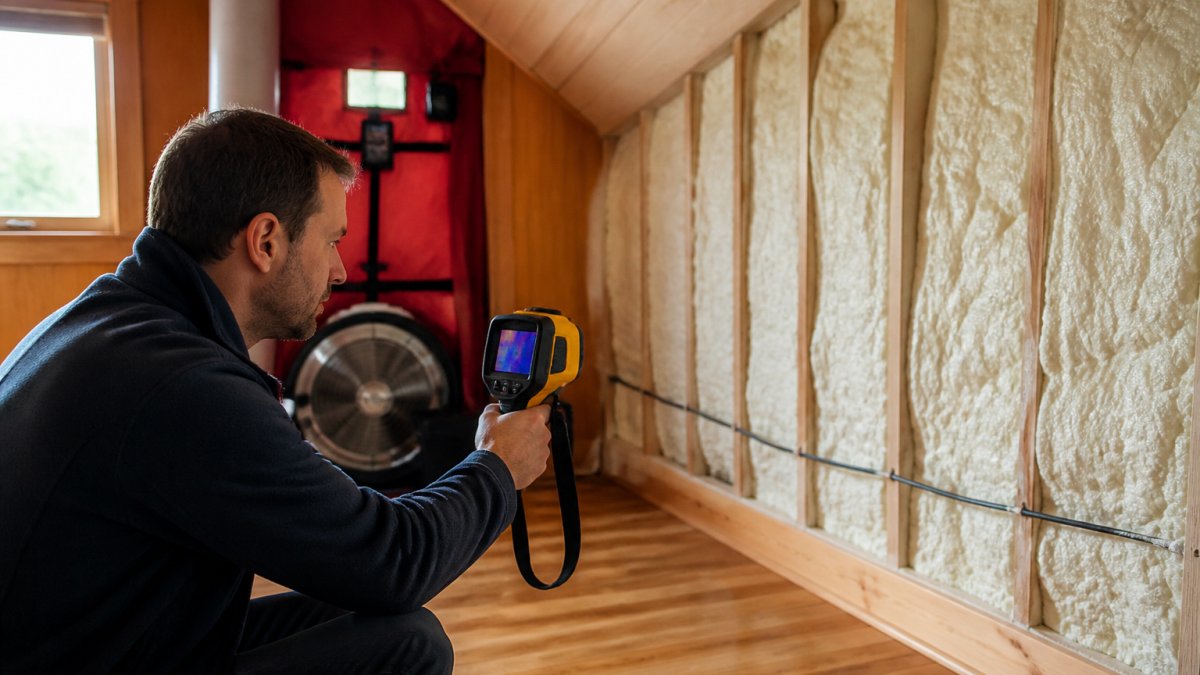
The blower-door test is the workhorse. A calibrated fan mounts in an open exterior door and depressurizes the house. The assessor then walks the interior with a smoke pencil or infrared camera, and every draft reveals itself.
Thermal imaging shows temperature differences on walls, ceilings, and around windows. Cold streaks mean missing insulation or air leaks. Together, these tools turn vague complaints about "drafts" into a specific list of locations.
Home Energy Audit Cost: What Drives the Price
Pricing depends on house size, age, and how deep the assessment goes. A basic walk-through costs far less than a full diagnostic with blower-door and thermal testing. Expect to pay more for older homes, multiple heating systems, or a detached garage or addition.
The main cost factors:
- Square footage and number of storeys
- Age and complexity of the home
- Type of test performed (visual only vs. full diagnostic)
- Travel distance for the assessor
- Report depth and follow-up support
We don't publish flat rates because every house is different. Contact us for a quote based on your home.
How to Verify Assessor Credentials and Compare Quotes
Ask three questions before you book anyone:
- What certifications do you hold? Look for recognized energy advisor credentials.
- What tests are included? Blower door and thermal imaging should be named explicitly.
- What does the report contain? Request a sample.
Compare quotes on scope, not just price. A cheaper quote that skips testing is not a bargain.
Home Energy Audit Payback Period: The Math That Decides It
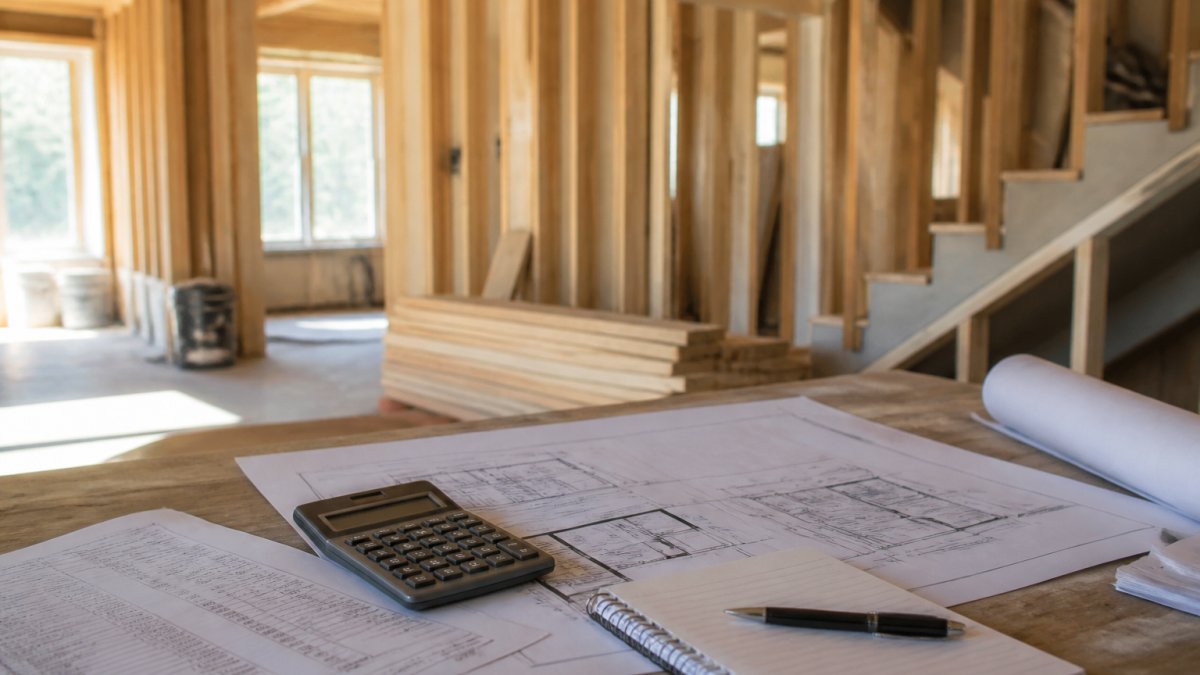
Payback is the time it takes for cumulative savings to equal what you spent on the audit plus the recommended upgrades. The formula is simple; the inputs are where most homeowners go wrong. Treat every number below as a range, because savings depend on your home, your energy prices, the weather, and how you actually live in the space.
A Transparent Payback Framework
Use this four-input model. Write each number down before you decide.
- Audit cost, the fee you pay the assessor, including any follow-up report or verification visit.
- Upgrade cost, the quoted cost of the fixes you actually intend to complete, not the full wish list.
- Annual savings, the report's estimated savings, adjusted downward for uncertainty (see below).
- Incentives, rebates, grants, or financing that reduce your net outlay.
Net cost = (Audit cost + Upgrade cost) − Incentives. Payback in years = Net cost ÷ Annual savings.
Worked Example (Illustrative, Not a Quote)
Suppose an audit plus air sealing and attic insulation totals a net cost of $4,000 after incentives, and the modeled savings are $600 per year. Payback is roughly 6.7 years.
Run the same math for a heat pump replacement and the payback often stretches well past a decade unless your existing system is failing or you are displacing a high-cost fuel.
How Home Type, Energy Price, and Climate Move the Number
- Older, leaky detached homes in cold climates tend to show the fastest payback on air sealing and insulation because the baseline waste is high.
- Newer, tightly built homes often show slow payback because there is little waste left to eliminate.
- Higher energy prices shorten payback; lower prices lengthen it. Your utility rate structure (flat vs. time-of-use) matters as much as the headline price.
- Climate severity changes annual heating and cooling hours, which changes savings.
- Occupant behavior, thermostat setbacks, window use, occupancy, can swing realized savings by a wide margin.
Modeled vs. Measured Savings
A report's savings figure is a model, not a meter reading. It assumes a set of conditions that may not match your household. To close the gap, track your actual energy use for 12 months before and after the work, normalize for weather where possible, and compare. If measured savings fall short of the model, the cause is usually incomplete work, changed behavior, or a milder season, not a fraudulent report.
When Payback Is the Wrong Lens
If your goal is comfort in a chronically cold room, a healthier indoor environment, or lower emissions, payback alone will understate the value. Use it as one input, not the verdict.
When an Audit Is Not Worth the Cost
An audit may not pay off if your home is new and already built to current standards. It's also hard to justify if you're planning to move within a year or two, since you won't stay long enough to recover the cost.
Skip it if your only complaint is a single drafty door. Fix the weatherstripping first. And if your budget can't cover any of the recommended upgrades, the report will just sit in a drawer.
If you're renovating anyway, fold the audit into the design phase. Fixing insulation and air sealing while walls are open costs far less than doing it later as a standalone job.
DIY Home Energy Audit Checklist for a First-Pass Inspection
You can find obvious problems yourself before paying for a professional audit. Work through this list on a cold, windy day when leaks are easiest to spot.
- Feel for drafts around windows, doors, and electrical outlets
- Check attic insulation depth and look for gaps
- Inspect weatherstripping on all exterior doors
- Look for daylight around window frames
- Check the furnace or heat pump filter and replace if dirty
This checklist won't replace a blower-door test. It will tell you whether a professional audit is likely to find real problems.
Home Energy Audit Recommendations, Ranked by Cost and Impact
Start with the cheapest fixes that deliver the biggest gains. Air sealing and attic insulation almost always top the list. Both are low-cost and cut heating losses fast.
Next come upgrades with longer paybacks:
- Air sealing (caulking, weatherstripping, sealing penetrations)
- Attic and wall insulation
- Window and door replacement
- Heating and cooling system upgrades
- Smart thermostat installation
Windows and HVAC systems cost the most, so tackle them last unless they're failing.
Rebates and the Uncertainty in Every Savings Estimate
Every savings estimate is a projection, not a promise. Weather varies, energy prices shift, and how you live in the home changes actual use. Treat the report's numbers as a range, not a guarantee. The same caution applies to incentives: programs change, budgets run out, and eligibility rules are specific.
A Consolidated Way to Check Current Eligibility
Rather than relying on a single program page, work through these layers in order:
- Federal programs, check the current federal energy efficiency initiative for eligible upgrades, required pre- and post-retrofit evaluations, and application windows.
- Provincial and territorial programs, most offer their own rebates, often stackable with federal ones but sometimes mutually exclusive. Confirm the stacking rules in writing.
- Utility and distributor programs, many local utilities run separate rebates for insulation, heat pumps, and thermostats. These often have the shortest windows and the smallest budgets.
- Municipal and regional programs, some municipalities top up federal or provincial amounts for specific neighborhoods or income levels.
For each layer, capture four facts: the eligible upgrade list, the maximum amount, the required documentation (often a pre-retrofit audit and a post-retrofit audit by a qualified advisor), and the deadline or budget-exhaustion date.
Stacking, Sequencing, and the Pre-Audit Rule
A common and expensive mistake is completing work before the audit. Many programs require a pre-retrofit evaluation to establish a baseline and a post-retrofit evaluation to verify the work.
Stacking rules vary. Some programs allow federal plus provincial plus utility amounts on the same upgrade; others cap the total or exclude certain combinations. Get written confirmation from each administrator before you sign a contractor agreement.
Deadlines, Budget Exhaustion, and Documentation
Programs frequently pause or close when funds are depleted, sometimes with little notice. Apply early, keep copies of every submission, and photograph invoices and equipment labels. If a program requires a specific advisor credential or a specific test (for example, a blower-door result), confirm the assessor can produce it before booking.
Keeping the Savings Estimate Honest
Pair the incentive research with a realistic savings range. If a rebate covers a meaningful share of the net cost, payback shortens; if the rebate is small or the upgrade is expensive, payback lengthens. Recalculate payback after incentives are confirmed, not before.
Natural Resources Canada energy efficiency programs
Canada Greener Homes initiative details
Never start work on the assumption a rebate will be approved. Confirm eligibility, complete any required pre-retrofit audit, and get written confirmation before demolition or installation begins.
The audit is worth it when the report changes what you'd otherwise do. If it confirms your plan, ranks the work, and unlocks incentives you would have missed, it has paid for itself before the first upgrade.
Conclusion: Making the Call
Deciding whether a home energy audit is worth the cost comes down to your house, your timeline, and your plans.
At Timeless General Contracting, we bring 25 years of experience and Red Seal certification to every high-performance renovation. Our Client Project Portal lets you track your build in real time, so you always know what's happening and why.
Frequently Asked Questions
How much does a home energy audit cost?
Professional assessment fees depend on the size and age of the house, the depth of testing, and whether a follow-up visit is included. A basic walkthrough with a report sits at the low end, while a full evaluation with a blower-door test, thermal imaging, and a post-upgrade verification costs more. Rebate programs can offset part of the fee when the audit is tied to an eligible retrofit, so confirm current program rules and ask each assessor what is included before comparing quotes.
How much can a home energy audit save on energy bills?
Savings vary with the starting condition of the house. A drafty home with thin attic insulation and an old heating system has far more room to improve than a recently built one. Typical fixes identified in an audit, such as sealing air leakage, topping up insulation, and tuning the HVAC system, cut energy consumption by a meaningful margin, but the exact figure depends on your utility costs, climate, and how many recommendations you act on. Treat any quoted percentage as an estimate, not a guarantee.
Can I do a home energy audit myself?
A DIY home energy audit checklist is useful for spotting obvious problems: drafts around windows and doors, gaps at electrical outlets, missing attic insulation, and an outdated thermostat. What a DIY pass cannot do is measure whole-house air leakage or reveal hidden gaps inside walls. A blower-door test and thermal imaging show exactly where conditioned air escapes, which is why a professional assessment often finds issues a visual walkthrough misses. Use the DIY check first, then decide whether the full test is justified.
What should I do after a home energy audit?
Read the assessment report carefully and sort the home energy audit recommendations into three groups: quick fixes you can do now, upgrades worth bundling together, and items that only make sense alongside a larger renovation. Get quotes for the priority items, check which qualify for rebates, and schedule the work in an order that avoids redoing anything twice. If you plan a high-performance renovation, bring the report to your contractor so the audit findings shape the scope from the start.