 listicle
Energy Efficient Home Upgrades for Seniors: 9 Grant-Eligible Options
Table of Contents
- Energy Efficient Home Upgrades for Seniors: What You Need to Know
- 9 Energy Efficient Home Upgrades That Qualify for Government Grants
- 1. Heat Pump Installation and Heat Pump Grants Canada Seniors
- 2. Attic, Basement, and Wall Insulation Upgrades
- 3. Insulation Grants for Seniors Canada: What's Available
- 4. ENERGY STAR Certified Windows and Doors
- 5. Smart Home Technology for Seniors Canada
- 6. Tankless Water Heaters
- 7. Weather Stripping and Draft Sealing
- 8. LED Lighting Upgrades
- 9. Energy Audit Assessment
- Canada Greener Homes Grant for Seniors: Federal Funding Explained
- Eligibility Requirements for Energy Efficiency Rebates
- Accessibility-Focused Energy Upgrades: Aging in Place and Efficiency Combined
- Step-by-Step Application Guide for Non-Tech-Savvy Seniors
- How to Work with a Contractor for Energy Efficient Upgrades
- Conclusion
Energy Efficient Home Upgrades for Seniors: 9 Grant-Eligible Options
Last Updated: July 29, 2026
Energy Efficient Home Upgrades for Seniors: What You Need to Know
Many Canadian seniors live in homes that waste substantial energy, driving up utility bills and creating uncomfortable living conditions. Federal and provincial programs now cover a significant portion of upgrade costs. According to Natural Resources Canada's Canada Greener Homes Initiative, eligible retrofits can receive grants up to $5,000 for insulation work and up to $10,000 for heat pump installation when switching from oil heating. For seniors on fixed incomes, this support transforms what might otherwise be unaffordable projects into manageable investments.
| Upgrade Type | Grant Potential | Difficulty Level | Impact on Bills |
|---|---|---|---|
| Heat Pump Installation | Up to $10,000 | Professional only | 40-50% reduction |
| Attic Insulation | Up to $5,000 | Professional recommended | 15-20% reduction |
| Basement Insulation | Up to $5,000 | Professional recommended | 10-15% reduction |
| ENERGY STAR Windows | Up to $3,200 | Professional only | 10-15% reduction |
| Smart Thermostat | $50 grant | DIY-friendly | 10-15% reduction |
| Tankless Water Heater | Varies by province | Professional only | 20-30% reduction |
| Weather Stripping | Under $100 | DIY-friendly | 5-10% reduction |
| LED Lighting | Minimal grant | DIY-friendly | 5-10% reduction |
| Energy Audit | Up to $600 reimbursement | Professional only | Identifies savings |
9 Energy Efficient Home Upgrades That Qualify for Government Grants
1. Heat Pump Installation and Heat Pump Grants Canada Seniors
A cold climate air source heat pump is your single most effective upgrade if you're currently using oil heating or electric resistance heating. These systems extract heat from outdoor air even at temperatures below -20°C, providing both heating and cooling from one unit.
Switching from oil to a heat pump qualifies seniors for federal grants up to $10,000 under the Canada Greener Homes Grant, plus additional provincial support in most provinces. Heat pumps operate quietly, require minimal maintenance, and provide consistent comfort without drafty cold spots. You control temperature from a central location or remotely via smartphone.
If your home's electrical panel is undersized (common in houses built before 2000), you may need a panel upgrade before installation, though this is often eligible for rebates as part of the overall project.
2. Attic, Basement, and Wall Insulation Upgrades
Insulation is the foundation of energy efficiency. Heat escapes through poorly insulated attics in winter and enters through uninsulated basements in summer. Upgrading insulation in these areas typically reduces heating and cooling costs by 15-20%.
Attic insulation is the easiest and most cost-effective upgrade. Most older homes have 2-4 inches of insulation; current best practice calls for 10-12 inches (R-40 to R-50 in most Canadian climates). Basement insulation is equally important but more disruptive. Wall insulation is the most complex and expensive option but delivers consistent year-round benefits and qualifies for the largest grants.
Professional installation is strongly recommended to ensure proper installation that avoids thermal bridges and air gaps.
3. Insulation Grants for Seniors Canada: What's Available
The Canada Greener Homes Grant provides up to $5,000 for eligible insulation work, and many provinces offer additional top-ups for low-income seniors. You typically need an EnerGuide home energy audit first. The audit identifies which insulation upgrades will deliver the greatest energy savings for your specific home and qualifies you for grant funding. Professional audits cost $300-$700 but are often reimbursed up to $600 once you complete recommended upgrades.
Alberta's Seniors Home Adaptation and Repair Program (SHARP) is particularly valuable for low-income seniors, offering grants up to $15,000 for energy-efficient upgrades with no monthly repayment requirement; the loan is due only upon sale of the home. Registered contractors handle grant paperwork as part of project delivery, removing a major barrier for seniors unfamiliar with grant administration.
4. ENERGY STAR Certified Windows and Doors
Windows and doors are the second-largest source of heat loss in older homes. Replacing single-pane windows with ENERGY STAR certified models reduces heating and cooling costs by 10-15% while eliminating drafts and improving comfort.
ENERGY STAR windows feature low-emissivity coatings that reflect heat back into your home during winter while blocking solar heat during summer. Many include argon gas between panes for additional insulation. Modern windows operate more smoothly than older models and require less force to open and close.
Window replacement typically takes 2-3 days for a full house. Grants cover a portion of the cost, though replacement windows remain a significant upfront investment.
5. Smart Home Technology for Seniors Canada
Smart thermostats are the easiest energy upgrade for seniors to implement. Installation is straightforward; most people can install a compatible model in 15-20 minutes.
A smart thermostat learns your schedule and adjusts heating and cooling automatically. If you leave home at 8 a.m. every weekday, it reduces temperature an hour before you leave. When you return at 5 p.m., it warms the house in advance. Over a heating season, this automation typically saves 10-15% on heating costs.
For seniors with mobility challenges, a smartphone app lets you adjust temperature from bed or while sitting down. Voice control integration with Amazon Alexa or Google Home makes adjustments possible without touching anything. The Canada Greener Homes Grant provides a $50 rebate when you install a smart thermostat alongside another eligible retrofit.
6. Tankless Water Heaters
A tankless (or on-demand) water heater heats water only when you turn on a tap, eliminating the energy wasted keeping 40-60 gallons of water hot 24/7. This approach reduces water heating costs by 20-30% in typical homes.
The practical benefit for seniors is immediate: endless hot water without waiting for the tank to reheat between showers. Installation requires professional work and may involve upgrades to gas lines or electrical systems. Tankless units take up minimal space; many models mount on a wall, freeing up valuable basement or utility room space.
Check your provincial program to confirm eligibility before investing, as not all provinces provide grants for this upgrade.
7. Weather Stripping and Draft Sealing
Weather stripping is the most affordable energy upgrade available. Products like removable weatherstrip sealants and draft stops cost $10-$25 per unit and address one of the most common sources of energy waste: air leaks around doors and windows.
An older home with poor weather stripping can have air infiltration equivalent to leaving a window permanently open. Sealing these gaps delivers immediate comfort improvements. Weather stripping is completely reversible and DIY-friendly; you can apply removable sealants seasonally without damaging paint or trim.
8. LED Lighting Upgrades
LED bulbs use 75% less energy than incandescent bulbs and last 15-25 times longer, reducing both energy consumption and replacement costs. The payback period is typically 6-12 months.
LED bulbs reach full brightness instantly, produce less heat, and are available in warm color temperatures that feel natural. LED bulbs now cost $2-$5 each. You can upgrade gradually or do a full-home conversion in an afternoon.
9. Energy Audit Assessment
An EnerGuide home energy audit is the foundation for all other upgrades. A certified energy auditor performs a blower door test to measure air leakage, inspects insulation levels, evaluates your HVAC system, and reviews windows and doors. The result is an EnerGuide rating (1-100 scale) and a prioritized list of recommended upgrades.
The audit typically costs $300-$700, but you receive up to $600 reimbursement once you complete recommended upgrades. More importantly, the audit identifies which upgrades will deliver the greatest energy savings for your specific home. You cannot access Canada Greener Homes Grant funding without an audit result.
Canada Greener Homes Grant for Seniors: Federal Funding Explained
The Canada Greener Homes Grant is the primary federal program supporting energy efficient home upgrades for seniors. Administered by Natural Resources Canada, the program provides grants up to $5,000 per eligible retrofit, with some upgrades (like heat pump installation from oil) reaching $10,000.
The process is straightforward: obtain an EnerGuide audit, complete approved upgrades with a registered contractor, and submit documentation for reimbursement. Grants are processed within 4-6 weeks of submission. The program prioritizes low-income households and seniors, making it particularly accessible for fixed-income retirees.
You must hire a contractor registered with the program to ensure the work meets quality standards and qualifies for reimbursement. The grant covers a percentage of eligible costs, not 100% of the project.
Eligibility Requirements for Energy Efficiency Rebates
To qualify for federal and provincial energy efficiency rebates, you must meet several criteria:
Homeownership: You must own the home and live in it as your primary residence. Rental properties and vacation homes are ineligible for most programs.
Home Age: Most programs require the home to be at least 10 years old.
Income Requirements: Some provincial programs have income caps. For example, Alberta's SHARP program serves seniors with annual household income of $75,000 or less. Check your provincial program for specific thresholds.
Energy Audit: A professional EnerGuide audit is required before you can access most grants and must be completed by a certified energy auditor registered with Natural Resources Canada.
Contractor Registration: Work must be completed by contractors registered with the grant program.
Timing: Some programs require that you complete work within 12-18 months of your energy audit.
Documentation: You'll need receipts, invoices, and proof of work completion. Registered contractors typically handle this documentation as part of their service.
Accessibility-Focused Energy Upgrades: Aging in Place and Efficiency Combined
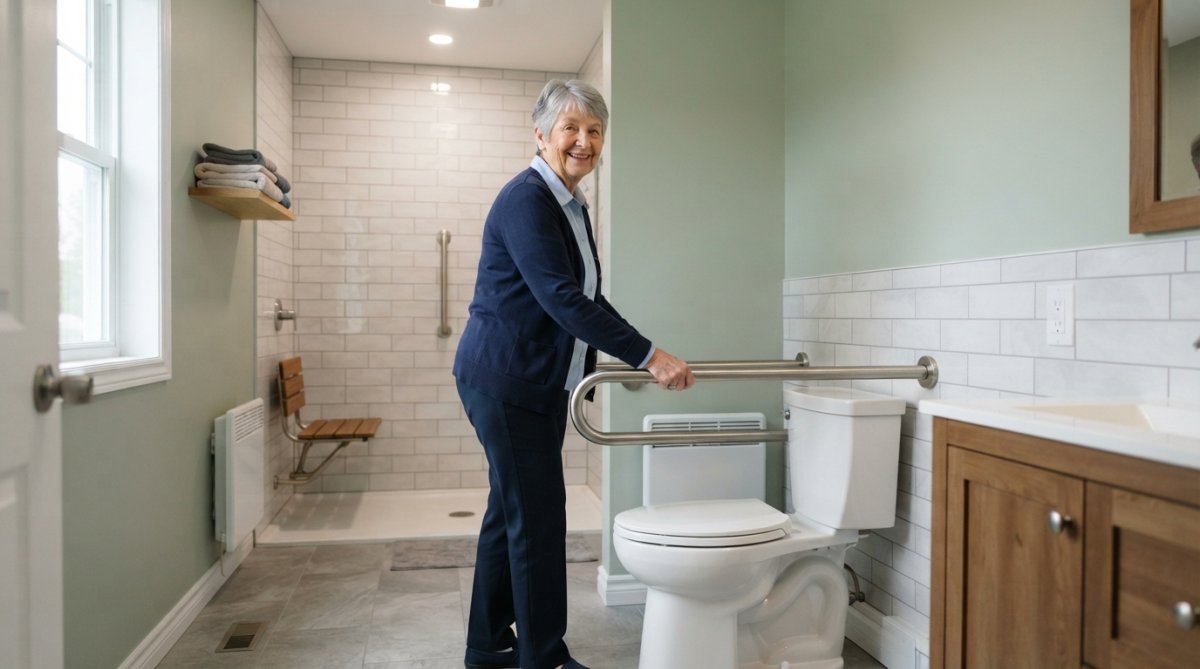
Energy efficiency and accessibility often work together. Upgrades that reduce your need to adjust thermostats, open windows manually, or maintain complex heating systems also support aging in place, the ability to remain safely and comfortably in your home as you age.
Smart thermostats exemplify this overlap. Rather than walking to a wall-mounted thermostat multiple times daily, you adjust temperature from your phone or voice command. Modern windows with accessible hardware require less force to operate than older models. Heat pump systems are quieter and more consistent than furnaces, eliminating the need for frequent manual adjustments.
When planning energy upgrades, discuss accessibility features with your contractor. Modern windows, doors, and thermostats come in designs that support aging in place without extra cost.
Step-by-Step Application Guide for Non-Tech-Savvy Seniors
Most of the grant application work falls to your contractor. Here's what you'll actually do:
Step 1: Schedule an Energy Audit (Week 1) Contact a certified energy auditor in your area. Confirm they're registered with Natural Resources Canada. The audit takes 2-3 hours and costs $300-$700. You'll receive the EnerGuide rating and recommendations within 5-7 business days.
Step 2: Review Recommendations with Your Contractor (Week 2) Meet with a registered contractor to discuss which upgrades you want to pursue. Bring your energy audit report. The contractor will explain costs, timelines, and grant eligibility for each option.
Step 3: Get a Written Quote (Week 2-3) The contractor provides a detailed written quote listing each upgrade, materials, labor, and timeline. Confirm which costs are eligible for grants and which are your responsibility.
Step 4: Schedule the Work (Week 3-4) Once you approve the quote, the contractor schedules the work. Many seniors prefer to schedule during warmer months to minimize heating disruption.
Step 5: Complete the Work (Weeks 4-8, depending on scope) The contractor completes the upgrades according to the agreed timeline.
Step 6: Contractor Submits Grant Application (Week 8-9) The contractor gathers invoices, proof of work completion, and your energy audit results, then submits the grant application on your behalf. You don't need to do this; your contractor handles it.
Step 7: Receive Grant Reimbursement (Week 12-16) The program processes your application within 4-6 weeks. Once approved, the grant is deposited directly to your account.
Key Point: Most of this process happens without you needing to use a computer. You attend the audit appointment, meet with the contractor, and approve the work. The contractor handles applications and submissions.
How to Work with a Contractor for Energy Efficient Upgrades
Choosing the right contractor is as important as choosing which upgrades to pursue. Here's what to look for:
Registration and Credentials: Confirm the contractor is registered with the Canada Greener Homes Grant program. Verify they hold a Red Seal certification in their trade. Red Seal means they've met national standards for competency and training.
Grant Experience: Ask how many grant projects they've completed. A contractor experienced with grants knows the requirements, documentation standards, and timelines.
References: Request references from recent projects, particularly other seniors or aging homeowners. Call 2-3 references and ask about communication, timeliness, and how the contractor handled unexpected issues.
Transparency: A good contractor explains the process clearly, provides written quotes, and keeps you informed throughout the work.
Insurance and Warranty: Confirm they carry liability insurance and workers' compensation. Ask about warranties on materials and labor.
Written Agreement: Never proceed without a signed contract that includes scope of work, timeline, total cost, payment schedule, and warranty details.
Red Flags to Avoid:
- Pressure to decide immediately or pay upfront in full
- Reluctance to provide references or credentials
- Vague quotes that don't itemize costs
- Unwillingness to discuss the grant process
- No written contract or warranty
Conclusion
Energy efficient home upgrades for seniors are more accessible than ever, thanks to federal and provincial grant programs that cover substantial portions of upgrade costs. Whether you start with an affordable weather-stripping project or pursue a comprehensive heat pump installation, each upgrade reduces your utility bills, improves comfort, and supports aging in place.
The key is starting with an energy audit to identify which upgrades will deliver the greatest savings for your specific home. From there, working with an experienced, registered contractor removes the complexity of grant applications and ensures the work meets quality standards. Contact us for a consultation to discuss which energy efficient home upgrades make sense for your home and budget.
Frequently Asked Questions
What government programs are available for seniors for energy-efficient home upgrades in Canada?
The Canada Greener Homes Grant (when available) provides rebates up to $5,000 for insulation upgrades, $10,000 for heat pump installation, and $50 for smart thermostats. Provincial programs vary, Alberta offers the Seniors Home Adaptation and Repair Program (SHARP) with loans up to $40,000 and grants up to $15,000 for eligible seniors. An EnerGuide Home Energy Audit ($300-$700) is often required to qualify and identifies your home's specific energy efficiency needs.
How do I apply for energy efficiency grants and loans in Canada as a senior?
Start with an EnerGuide Home Energy Audit to identify eligible upgrades and receive a customized improvement roadmap. Contact your provincial government office or visit Natural Resources Canada's website for current program details. Many programs require you to work with certified contractors. Timeless General Contracting can guide you through the process, our Red Seal certification and 25 years of experience ensure compliance with all grant requirements and our Client Project Portal keeps you informed every step of the way.
What are the most cost-effective energy-efficient upgrades for seniors on a budget?
Weather stripping and draft sealing are the most affordable starting points (under $25 per door or window). LED lighting upgrades offer quick payback through reduced electricity costs. For larger investments, attic insulation typically delivers the highest return on energy savings. Heat pumps qualify for substantial grants ($10,000+), making them cost-effective after rebates, especially if replacing oil heating. Prioritize upgrades your energy audit recommends, these target your home's biggest energy losses.
Can smart home technology help seniors save energy while improving safety?
Yes. Smart thermostats like the ecobee Smart Thermostat Premium ($329.99) learn your schedule and optimize heating/cooling automatically, reducing energy consumption by 10-15%. They're eligible for a $50 Canada Greener Homes Grant and can be controlled remotely via smartphone if you need family support. Smart home systems also integrate with accessibility features, voice-controlled thermostats eliminate the need to reach physical controls, combining energy efficiency with aging-in-place benefits.
Are there specific grants for low-income seniors for home energy retrofits in Canada?
Yes. Alberta's Seniors Home Adaptation and Repair Program (SHARP) offers grants up to $15,000 for seniors 65+ with annual income of $75,000 or less and at least 25% home equity. The Canada Greener Homes Grant (when available) has no income restrictions. Many utilities also offer energy efficiency rebates directly. Contact your provincial seniors' services office or local utility provider to confirm current income-qualified programs in your area.
This article was written using GrandRanker