 listicle
Best Energy Efficient Home Renovation Ideas for Canadian Homes
Table of Contents
- Best Energy Efficient Home Renovation Ideas: Where to Start
- Getting a Home Energy Audit in Canada
- Insulation and Air Sealing: Foundation of Energy Savings
- Heat Pump Installation Cost and Benefits in Canada
- Energy-Efficient Windows and Double Glazing
- Smart Thermostats and Home Automation
- LED Lighting and Energy Star Appliances
- Solar Panels and Renewable Energy Options
Last Updated: July 28, 2026
Best Energy Efficient Home Renovation Ideas: Where to Start
Energy efficiency directly impacts your monthly expenses and home's resale value. Canadian homes lose significant heat through poor insulation, air leaks, and outdated systems. Research from Natural Resources Canada's home energy efficiency programs shows that strategic renovations can reduce heating costs by 20-30% annually. Many upgrades qualify for government rebates that offset initial costs.
The challenge is prioritizing which renovations will deliver the greatest return for your specific home and climate. The most effective approach combines quick wins with strategic long-term investments.
| Renovation Type | Impact Level | Typical Timeline | Best For |
|---|---|---|---|
| Home Energy Audit | Foundation | 1-2 weeks | All homeowners (required for rebates) |
| Insulation & Air Sealing | High | 2-4 weeks | Cold climates, older homes |
| Heat Pump Installation | High | 1-2 weeks | Replacing furnace/AC |
| Window Replacement | Medium | 2-6 weeks | Homes with drafty windows |
| Smart Thermostat | Low | 1-2 hours | Quick efficiency gains |
| LED Lighting | Low | 1-3 days | Immediate savings |
| Energy Star Appliances | Medium | Ongoing | Replacement cycle |
| Solar Panels | High | 4-8 weeks | Long-term investment |
Why Energy Efficiency Matters for Your Home
Most homeowners underestimate how much energy their home wastes. According to Statistics Canada's residential energy consumption data, heating accounts for roughly 60% of residential energy use in Canada, making it the single largest opportunity for savings. Energy-efficient homes command higher prices and sell faster, while reducing your carbon footprint.
How to Prioritize Your Renovations
Smart prioritization follows one principle: fix the foundation before optimizing systems. Air sealing and insulation create the thermal envelope that makes everything else work efficiently. Here's the practical sequence:
- Get a home energy audit - Identifies where your home is losing energy and prioritizes upgrades by ROI.
- Seal air leaks and upgrade insulation - Fix the envelope first.
- Upgrade your heating system - Replace an old furnace with a high-efficiency heat pump.
- Improve windows and doors - Address drafts and heat loss.
- Add smart controls - Install a smart thermostat to optimize your efficient system.
- Switch to LED and Energy Star appliances - Lower-priority, ongoing upgrades.
- Consider solar - A long-term investment after thermal efficiency is optimized.
Climate matters. In Atlantic Canada's cold winters, heating efficiency is the priority. In warmer regions, cooling efficiency and solar potential carry more weight.
Getting a Home Energy Audit in Canada
A home energy audit is a comprehensive assessment conducted by a Registered Energy Advisor that identifies where your home is losing energy and recommends upgrades in order of priority. The audit produces an EnerGuide rating, a standardized score comparing your home's energy performance to similar homes. Cost typically ranges from $300 to $700, but many programs cover part or all of this expense. You cannot access most government rebates without an EnerGuide assessment.
What an EnerGuide Assessment Reveals
The auditor performs a blower door test to measure air leakage, evaluates insulation levels in your attic, walls, basement, and crawl spaces, assesses windows, doors, and HVAC systems, and reviews heating fuel type and efficiency. This data produces your EnerGuide rating (0-100 scale, with higher scores indicating better efficiency).
Natural Resources Canada's EnerGuide program details explains that the rating accounts for heating, cooling, hot water, and appliance energy consumption.
Using Your Audit Results to Plan Upgrades
The report ranks recommended upgrades by impact, showing energy savings and estimated cost savings for each. A typical report might show: "Upgrading attic insulation from R-20 to R-60 will save approximately 15% on heating costs and cost $2,500 to install." This lets you calculate ROI. The audit also qualifies you for rebates. Federal programs like the Canada Greener Homes Grant require an EnerGuide assessment.
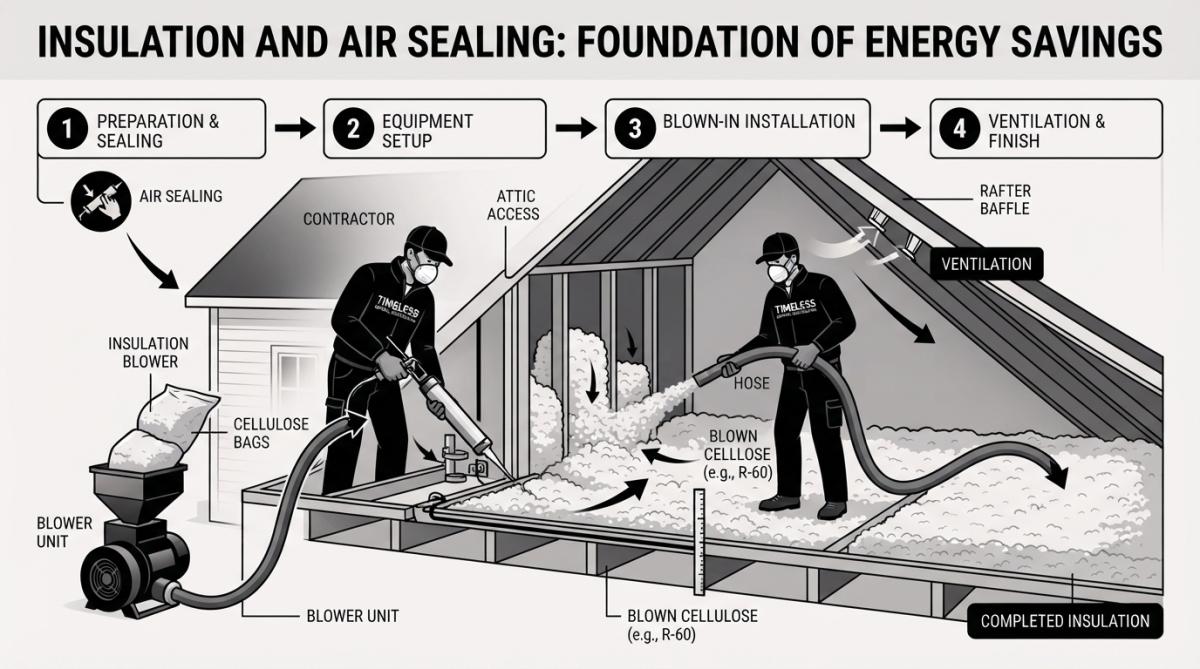
Insulation and Air Sealing: Foundation of Energy Savings
Your home's thermal envelope, walls, attic, basement, and foundation, is where most energy efficiency gains happen. Poor insulation and air leaks are the single biggest cause of wasted heating and cooling energy in Canadian homes.
Attic Insulation Upgrades
Your attic is the single most important place to add insulation. Most older Canadian homes have attic insulation rated R-20 or lower. Modern standards in cold climates call for R-50 to R-60. Upgrading from R-20 to R-60 can reduce heating losses through the attic by 50-60%. Blown-in cellulose or fiberglass insulation typically costs between $1,500 and $4,500 installed, with a payback period of 5-10 years through heating savings alone.
Spray Foam for Air Sealing
Spray foam insulation seals air leaks while providing high insulation value. Closed-cell spray foam has an R-value around R-6 to R-7 per inch, nearly double that of fiberglass batts. More importantly, it expands to fill cracks and gaps, creating an airtight seal. This makes it ideal for rim joists and cathedral ceilings. Spray foam typically costs $1.50 to $3.00 per board foot, with rim joist projects ranging $1,000-$2,500.
Weatherstripping and Caulking
Weatherstripping and caulking address small gaps that add up to significant heat loss. Both are inexpensive, typically $100-$300 for a whole-home project, and deliver immediate results. Prioritize the biggest air leaks identified during your energy audit.
Heat Pump Installation Cost and Benefits in Canada
Heat pumps are the most transformative upgrade for Canadian homeowners. A heat pump moves heat from outside air into your home in winter and reverses the process in summer for cooling. Modern cold-climate heat pumps work reliably down to -30°C or lower, making them viable across Canada. They're 2-3 times more efficient than traditional furnaces, delivering 2-3 units of heat output for every unit of energy input.
Cold-Climate Heat Pump Performance
Cold-climate heat pumps use advanced compressor technology designed for extreme temperatures. At -30°C, a cold-climate heat pump still delivers significant heating output. Many homeowners pair a heat pump with a backup electric resistance heater for the coldest days, creating a hybrid system that optimizes efficiency year-round. When it's -5°C or warmer, a heat pump delivers heat at 250%+ efficiency. When it's -20°C, efficiency drops to 150-200%, still outperforming a furnace running at 90% efficiency.
Installation costs for a ducted central heat pump system typically range from $14,000 to $18,000 including labor. Over 15-20 years, heating cost savings often exceed $20,000.
Energy-Efficient Windows and Double Glazing
Windows are a major source of heat loss. Modern high-performance windows reduce heat transfer by 60-70% compared to single-pane windows through double or triple glazing, low-emissivity coatings, and insulated frames.
Low-E Coatings and Thermal Performance
Low-emissivity (Low-E) coatings are microscopically thin metallic layers applied to glass that reflect infrared radiation back into your home in winter while reflecting solar heat away in summer. Low-E windows reduce heat transfer by roughly 25-30% compared to standard double-pane windows. Windows certified as Energy Star in Canada must meet strict performance standards, with a U-factor of 0.21 or lower.
Frame Materials and Installation Quality
The frame matters as much as the glass. Vinyl frames are thermally efficient and affordable. Fiberglass frames offer slightly better performance. Installation quality determines whether windows perform as designed. A professional installer seals gaps, insulates the rough opening, and caulks properly.
Window replacement typically costs $250-$400 per window installed. A typical home might have 15-20 windows, making a full replacement $3,750-$8,000. Government rebates of up to $250 per window can offset costs, with a payback period of 8-15 years.
Smart Thermostats and Home Automation
A smart thermostat learns your schedule and preferences, then automatically adjusts temperature to optimize comfort and efficiency. Smart thermostats reduce energy consumption through scheduling, geofencing, learning algorithms, and remote control. Most users report 10-15% reductions in heating and cooling costs. The Ecobee Smart Thermostat Premium costs $329.99 and integrates with smart home platforms like Apple HomeKit and Amazon Alexa. Installation typically takes 1-2 hours and is often a DIY project.
LED Lighting and Energy Star Appliances
LED lighting and Energy Star appliances are lower-priority upgrades compared to insulation and heating systems, but they deliver quick wins and meaningful cumulative savings.
LED Upgrades: Quick Wins for Energy Savings
LED bulbs use 75-80% less energy than incandescent bulbs and last 25-50 times longer. A typical home might have 40-50 light fixtures. Replacing all incandescent bulbs with LEDs costs roughly $200-$400 total, with annual energy savings of $100-$200. Over the 10-year lifespan of LED bulbs, you save $1,000-$2,000 in energy costs plus replacement bulb costs.
Energy Star Certified Appliances
When replacing a refrigerator, washer, dryer, or dishwasher, choose Energy Star certified models. They use 20-30% less energy than comparable non-certified appliances. An Energy Star refrigerator might cost $100-$200 more but saves $50-$100 per year in electricity. Over 15 years, the premium pays for itself multiple times over. Check Natural Resources Canada's rebate programs for current incentives in your province.
Solar Panels and Renewable Energy Options
Solar panels convert sunlight into electricity, reducing grid consumption and providing long-term energy independence. They're typically the final piece of a comprehensive efficiency strategy because solar ROI improves dramatically when your home is already efficient.
Solar Panel ROI in Canadian Climates
Solar economics depend on your location's solar resource, electricity consumption, and electricity rates. A typical 5 kW residential solar system costs $12,000 to $17,500 installed (before incentives). In Ontario with strong solar resources and high electricity rates, a 5 kW system generates roughly $1,200-$1,500 in electricity value per year, with a payback period of 8-12 years. Over a 25-year panel lifespan, cumulative savings exceed $25,000.
Grid-Tied vs. Off-Grid Systems
Most residential solar systems are grid-tied, connecting to the electrical grid. Excess solar electricity flows to the grid and you receive credits on your bill. Off-grid systems include battery storage, allowing independent operation from the grid, but cost $15,000-$25,000 for a 5 kW system with batteries.
Putting It All Together: A Prioritized Approach
The best energy efficient home renovation ideas work together. Each upgrade builds on the previous one, creating a high-performance home that's comfortable, affordable, and environmentally responsible.
Start with a home energy audit to get a clear roadmap and qualify for rebates. Tackle air sealing and insulation next, the foundation of all efficiency gains. Upgrade your heating system, whether that's a new furnace or (ideally) a heat pump. Add windows and smart controls. Install LED lighting and upgrade appliances on your replacement cycle. Finally, consider solar when your home's baseline efficiency is optimized. This sequence is based on physics, economics, and real-world experience. The result: a home that uses 30-50% less energy than before, with lower utility bills, improved comfort, and higher resale value.
Improving your home's energy efficiency requires strategy, not just spending money on upgrades. The most common challenge homeowners face is tackling renovations in the wrong order, wasting money on systems that can't perform well in a leaky, poorly-insulated home.
Timeless General Contracting specializes in high-performance renovation projects that combine expert craftsmanship with transparent project management. With 25 years of industry experience and Red Seal certification, we help homeowners prioritize energy efficient home renovation ideas and execute them properly. Our Client Project Portal keeps you informed in real-time, so you know exactly where your project stands and when milestones are complete. Get started with a consultation to map out your energy efficiency strategy and begin transforming your home into a high-performance asset.
Frequently Asked Questions
What are the most cost-effective energy efficient home renovation ideas for Canadian homes?
The most cost-effective upgrades typically include weatherstripping, caulking, and LED lighting replacements, which require minimal investment and deliver immediate energy savings. Attic insulation upgrades and air sealing projects offer strong ROI, with costs ranging from $1,500-$4,500 installed in most Canadian regions. A home energy audit ($300-$700) is essential, it identifies which renovations will save the most money for your specific home before you invest in larger projects like heat pumps or window replacements.
How much does a home energy audit cost in Canada, and is it worth it?
A home energy audit conducted by a Registered Energy Advisor typically costs $300-$700 CAD. It's worth the investment because it provides an EnerGuide rating, identifies your home's biggest energy losses, and creates a prioritized list of upgrades tailored to your home. Most importantly, an audit is required to qualify for federal and provincial energy efficiency rebates and grants, which often offset the audit cost and fund your renovations.
What energy efficiency grants are available for home renovations in Canada?
Canada offers several incentive programs for energy-efficient renovations. The Canada Greener Homes Grant provides up to $5,000 for eligible retrofits after a home energy audit. Provincial programs vary, Ontario, British Columbia, and Alberta offer additional rebates for specific upgrades like heat pumps, insulation, and windows. Rebates for ENERGY STAR appliances range from $25-$250 per unit. Visit Natural Resources Canada's website or your provincial energy office to confirm current program eligibility and application deadlines.
What is the average cost to install a heat pump in Canada?
Heat pump installation costs typically range from $14,000-$18,000 CAD for ducted air-source systems, including labor. Costs vary by system type (ducted vs. ductless), your home's size, and local labor rates. Cold-climate heat pumps like the Mitsubishi Zuba Series perform well in Canadian winters down to -30°C, but efficiency may require a supplemental heat source during extreme cold. Many provinces offer rebates of $2,000-$5,000 for heat pump installation, significantly reducing your net cost.
How can I prioritize energy efficient home renovation ideas if my budget is limited?
Start with a home energy audit to identify your biggest energy losses, typically air leaks, poor insulation, or inefficient heating. Prioritize projects with the shortest payback period: weatherstripping and caulking first, then attic insulation, then HVAC upgrades or heat pumps. Use available rebates and grants to stretch your budget further. LED lighting and smart thermostats offer quick, affordable wins. For larger projects like heat pumps or window replacement, plan phased implementation and apply for government incentives to offset costs.
This article was written using GrandRanker