 ultimate-guide
Why Transparency Matters in Home Construction
Table of Contents
- Why Transparency Matters in Home Construction: The Foundation of Trust
- Building Trust Through Open Communication
- Financial Transparency and Budget Accountability
- Questions to Ask Your Home Builder Before Signing
- Construction Contract Transparency Checklist
- Red Flags: Signs of a Dishonest Home Builder
- Digital Transparency Tools and Real-Time Project Tracking
- Why Transparency Matters for Project Timelines and Milestones
Last Updated: July 11, 2026
Why Transparency Matters in Home Construction: The Foundation of Trust
Transparency is critical for protecting your investment and building a sustainable relationship with your contractor. A home renovation is typically the second-largest investment most families make, yet many homeowners sign contracts based on verbal promises. When your contractor shares information openly about timelines, costs, materials, and challenges, you gain control over your project and prevent costly disputes.
How Transparency Protects Your Investment
Transparency acts as insurance against cost overruns and timeline delays. When your contractor operates with open documentation, you can track spending in real time and catch problems before they escalate. A typical renovation encounters unforeseen site conditions, rotted framing, outdated wiring, structural issues. With transparency, you see the problem immediately, understand the actual cost, and make informed decisions rather than facing expensive surprises after the fact.
Financial documentation is your first line of defense. A transparent contractor provides detailed invoices, material receipts, and labor breakdowns. Project milestones work similarly for timeline protection, when your contractor commits to specific completion dates and shares progress updates regularly, you can hold them accountable and plan accordingly.
The Cost of Hidden Information
Opacity is expensive. When information flows one direction, problems compound silently until they're too big to ignore. Many homeowners don't discover cost issues until the final bill arrives. A contractor who hides change orders or delays communicating about material substitutions can easily inflate costs by 15-30% above the original estimate. Timeline opacity is equally damaging, delays that could have been managed with early communication become crises.
Hidden material sourcing creates additional problems. If your contractor substitutes cheaper materials without telling you, you won't know until the project is complete. A transparent contractor tells you immediately when a specified material is unavailable and presents alternatives with cost and quality comparisons.
Building Trust Through Open Communication
Trust is built through consistent, honest communication from day one. A contractor who prioritizes transparency establishes trust quickly because homeowners see their interests are being protected.
Regular Progress Updates and Site Supervision
Progress updates should be scheduled and consistent, weekly calls, biweekly site visits, or whatever cadence suits your project. The contractor should provide photos of completed work, documentation of materials received, and updates on the next phase's timeline. Site supervision means your contractor is actively present during work hours, catching quality issues early and preventing safety problems.
Digital transparency tools have transformed this process. Platforms like the Client Project Portal at Timeless General Contracting allow homeowners to track builds in real time, seeing photos uploaded daily, timelines updated as work progresses, and budget tracking that shows spending against the estimate.
Establishing a Transparency Policy from Day One
The best time to establish transparency expectations is before work begins. Your contract should explicitly state that you'll receive weekly progress updates, have access to all invoices and material receipts, and have the right to visit the site during work hours. A transparency policy should cover communication cadence, documentation access, decision-making authority, and issue resolution procedures. Your contractor should agree to these terms willingly; if they resist transparency, that's a red flag.
Financial Transparency and Budget Accountability
Money is where most construction disputes happen. A transparent approach means your contractor breaks down costs clearly, communicates about changes immediately, and provides documentation that justifies every expense.
Understanding Cost Estimation and Change Orders
A detailed cost estimate should itemize every major component: labor, materials, permits, and contingency. The estimate should specify which materials will be used and which subcontractors will be hired. Detailed estimates like "framing labor: $8,500 (45 hours at $189/hour plus foreman oversight)" show careful planning, while vague estimates are red flags.
Change orders are inevitable in construction. A transparent contractor presents change orders immediately when they discover the need for them, explaining what's being added, why it's necessary, what the cost is, and how it affects the timeline. Many disputes arise because contractors complete work, then present the bill.
Avoiding Hidden Costs and Unforeseen Site Conditions
Hidden costs often hide in vague contract language. A transparent contract specifies exactly what "standard" means, what brands and grades of materials will be used, and what scope of work is included. A transparent contractor documents unforeseen conditions with photos and detailed descriptions, explaining why the condition needs to be addressed and presenting options at different price points so you can make informed decisions.
Questions to Ask Your Home Builder Before Signing
The vetting process is where transparency begins. The questions you ask reveal whether a contractor operates with openness or prefers to keep information private.
Transparency and Communication Expectations
Ask: "How often will I hear from you during the project?" "What's your preferred communication method?" "Who is my primary contact?" Listen for specific answers. A contractor who says "I'll call you weekly on Mondays at 10 AM" is more transparent than one who says "I'll stay in touch."
Ask about site access: "Can I visit the site during work hours?" and about documentation: "Will I receive copies of all invoices?" "Can I see material receipts?" A transparent contractor welcomes your presence and provides digital access to project information.
Budget, Timeline, and Change Order Procedures
Get specific about budget management. Ask: "Will you provide a detailed cost breakdown?" "What's included in contingency?" Request a clear change order process: "If unforeseen conditions arise, what's your procedure for notifying me?" Ask about timeline management: "What's your schedule for this project?" "How do you handle delays?" A transparent contractor answers these questions in detail and puts the answers in writing.
Construction Contract Transparency Checklist
Your contract is your protection. A transparent contract clearly defines what will be built, how much it will cost, when it will be complete, and what happens if things change.
Essential Contract Elements for Accountability
Your contract should include a detailed scope of work. Not "renovate kitchen" but "remove existing cabinets, countertops, and appliances; install new cabinetry per attached drawings; install granite countertops; install new appliances per specifications; paint walls and trim; install new lighting fixtures."
The contract should specify materials by brand and grade. Timeline should include specific milestones with dates. Payment terms should align with work completion, many transparent contractors use a schedule that ties payments to milestones: 20% upon signing, 20% when framing is complete, 20% when mechanical systems are roughed in, 20% when drywall is complete, 20% upon final walkthrough.
Change order procedures should be explicit. The contract should state that no work outside the scope will be performed without a written change order approved by the homeowner.
Documentation and Financial Records
Your contract should commit the contractor to providing regular financial documentation. Invoices should be itemized, showing what work was performed, which materials were used, and what labor was applied. Many transparent contractors provide digital access to project documentation including photos, daily logs, material deliveries, and inspection reports.
Red Flags: Signs of a Dishonest Home Builder
Not every contractor operates with transparency. Learning to spot red flags early prevents costly mistakes.
Vague Timelines and Evasive Communication
A contractor who can't give you specific timeline information is either disorganized or deliberately vague. Evasive communication is a major red flag. If your contractor doesn't return calls promptly, avoids answering specific questions, or gets defensive when you ask about progress, something is wrong. Watch for contractors who discourage site visits or push for payment before work is complete.
Resistance to Documentation and Unclear Sourcing
A contractor who refuses to provide invoices, material receipts, or progress photos is operating without transparency. Unclear material sourcing is a red flag. Watch for contractors who use subcontractors but won't tell you who they are or what they're being paid. Be wary of contracts with excessive change order language that gives the contractor unilateral authority to change the project.
Digital Transparency Tools and Real-Time Project Tracking
Modern construction technology has transformed how transparency works. Project management platforms designed for construction allow contractors to upload photos daily, update timelines as work progresses, and track spending against the budget. You can access this information anytime, from anywhere.
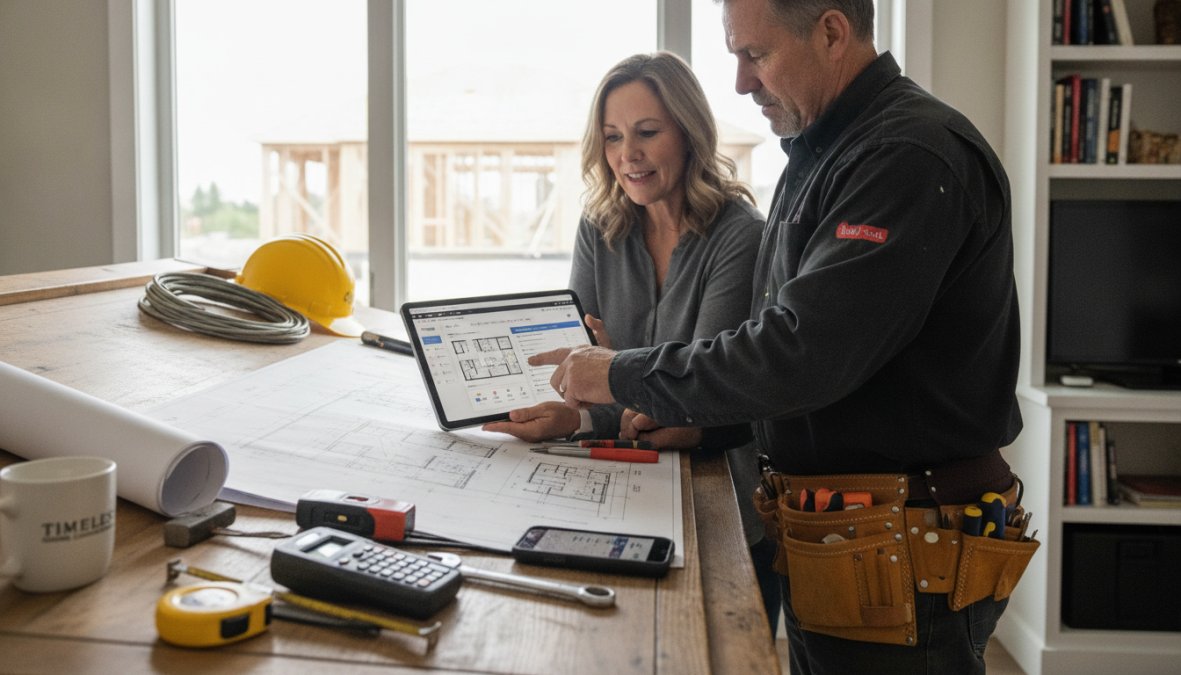
The Client Project Portal at Timeless General Contracting exemplifies this approach. Homeowners can track their build in real time, seeing photos of completed work, updated timelines, and budget tracking that shows spending against the estimate.
Why Transparency Matters for Project Timelines and Milestones
Timeline delays are one of the most common sources of frustration in construction. A transparent approach prevents delays from becoming crises. A detailed timeline with specific milestones creates predictability and stakeholder alignment, everyone involved understands the same schedule, improving coordination and reducing delays.
A transparent contractor communicates immediately when delays occur, explaining why the delay happened and presenting a revised timeline. Many transparent contractors build contingency time into their schedules as a buffer for problems that will inevitably arise.
| Risk Type | Transparent Response | Hidden Approach |
|---|---|---|
| Unforeseen conditions | Documented with photos, options presented immediately | Work completed, bill presented after |
| Material delays | Communicated proactively, timeline adjusted | Discovered late, blamed on supplier |
| Subcontractor issues | Replaced quickly, timeline adjusted | Hidden until project is behind schedule |
| Quality problems | Caught during work, corrected immediately | Discovered at final walkthrough |
| Budget overruns | Discussed as costs change, alternatives offered | Presented in final bill |
The relationship between homeowner and contractor is fundamentally about trust. That trust is built through transparency, clear communication, honest documentation, and accountability. When you choose a contractor who prioritizes transparency, you're not just getting a house built. You're getting peace of mind, predictability, and protection for your investment. Timeless General Contracting has built 25 years of client relationships on this foundation. With Red Seal certification and a Client Project Portal that tracks your build in real time, we combine expert craftsmanship with modern transparency. Learn more about transparent construction practices
Frequently Asked Questions
What does transparency mean in home construction?
Transparency in home construction means open, honest communication between the general contractor and homeowner about project costs, timelines, materials, progress, and any changes. It includes regular updates, clear financial documentation, accessible records, and a willingness to answer questions. Transparency ensures homeowners understand what's happening on their build, why decisions are made, and what to expect at each project milestone.
How does transparency help prevent budget overruns in construction projects?
Transparency prevents budget overruns by establishing clear cost estimation upfront, documenting all change orders with costs before work begins, and providing regular financial updates. When homeowners see detailed invoices, material sourcing documentation, and understand how costs are calculated, they can make informed decisions about scope changes. This accountability reduces surprise expenses and hidden costs that derail budgets.
What should be included in a construction contract transparency checklist?
A construction contract transparency checklist should include: detailed scope of work, specific materials and brands, labor costs broken down by phase, timeline with project milestones, change order procedures and costs, payment schedule, site supervision details, communication protocols, documentation requirements, and dispute resolution processes. Ensure the contract defines what happens with unforeseen site conditions and specifies how the contractor will keep you informed throughout the project delivery.
What are common red flags that indicate a dishonest home builder?
Red flags include: vague timelines or refusal to commit to dates, reluctance to provide written estimates or contracts, evasive answers about costs or materials, unwillingness to share references or credentials, resistance to progress updates or site visits, lack of clear change order procedures, and inability to explain material sourcing. Dishonest builders often avoid documentation, make promises verbally without written confirmation, and pressure you to sign without answering questions about the project.
This article was written using GrandRanker