 how-to
How to Prepare for a Home Renovation: Rural Guide
Table of Contents
- Define Your Scope of Work and Project Goals
- What Is a Red Seal Contractor and Why It Matters
- Home Renovation Permits and Municipal Bylaws
- Budget and Cost Estimation for Your Renovation
- Hire and Vet Licensed Contractors for Rural Projects
- Plan Your Timeline and Manage Logistics
- Prepare Your Home and Plan for Waste Disposal
- Conclusion
Last Updated: August 17, 2026
Define Your Scope of Work and Project Goals
The foundation of any successful home renovation preparation starts with clarity about what you're actually building. Too many homeowners begin contractor conversations without a clear scope of work, which leads to misunderstandings, budget overruns, and timeline delays. Your scope of work is the written definition of exactly what will be done, what won't be done, and what happens if conditions change during construction.
Start by walking through your home and documenting what needs to happen. Are you updating a kitchen? Replacing windows? Adding insulation and upgrading HVAC systems for energy efficiency? Is structural work involved? Write it down. Be specific. "Update the bathroom" is vague. "Replace all fixtures, retile the shower walls, upgrade electrical to current code, and install ventilation" is actionable.
Your project goals go beyond the physical work. Consider why you're renovating. Are you improving energy efficiency to lower heating costs? Adding accessibility features for aging in place? Increasing home equity before selling? Improving curb appeal? These goals shape every decision that follows. A contractor who understands your priorities can make recommendations that align with what actually matters to you.
Rural properties often present unique scope considerations. If your home uses well water, you may need testing before and after work. Septic systems require special handling during construction. Internet connectivity infrastructure might be limited, which affects how your contractor communicates project updates. These details belong in your scope of work from the start.
What Is a Red Seal Contractor and Why It Matters
A Red Seal contractor holds a credential recognized across Canada as proof of advanced trade qualifications. The Red Seal Program, administered through provincial and territorial apprenticeship authorities, certifies that a tradesperson has completed formal training, accumulated hours of hands-on experience, and passed a comprehensive interprovincial examination. When you hire a Red Seal certified contractor, you're hiring someone who meets a national standard, not just local or provincial requirements.
This matters because renovation work involves multiple trades: carpentry, electrical, plumbing, HVAC, and more. A Red Seal certified general contractor or tradesperson demonstrates they've met rigorous standards for their specific trade. They understand current building codes, safety protocols, and best practices across provincial boundaries. If you ever relocate or sell your home, a Red Seal certification adds credibility to the work that was completed.
In rural areas especially, Red Seal certification is a concrete way to verify credentials when you don't have local networks to ask for referrals. You can verify Red Seal status through provincial apprenticeship bodies or through the official Red Seal database. It's a simple check that takes minutes but provides significant assurance.
Timeless General Contracting holds Red Seal certification, which means the team brings nationally recognized trade qualifications to every project. This certification isn't marketing language, it's a credential that required formal apprenticeship, documented hours, and examination. When you work with a Red Seal certified contractor, you know the person managing your project has met objective standards for competence and safety.
Home Renovation Permits and Municipal Bylaws
Home renovation permits exist to protect you, your neighbors, and your property. They ensure that work meets current building codes, electrical safety standards, and structural integrity requirements. In rural areas, permit requirements vary by municipality, but most jurisdictions require permits for structural work, electrical upgrades, plumbing changes, and HVAC installation.
Start by contacting your local municipal office or building department. Ask which aspects of your planned renovation require permits. Some jurisdictions have simplified processes for minor renovations, while others require permits for nearly all work. The cost of permits varies, but they're typically a small percentage of your total project cost, and skipping them creates serious problems if you ever sell your home or file an insurance claim.
Your contractor should handle permit applications as part of their service. If they're reluctant to pull permits or suggest ways to avoid them, that's a red flag. Permits aren't obstacles, they're documentation that work was completed to code. When a future buyer or inspector reviews your home, permits prove the work was done properly.
Municipal bylaws also cover construction hours, site management, waste disposal, and contractor conduct. Rural municipalities often have specific rules about dust control, noise levels, and how long equipment can remain on-site. Understanding these rules upfront prevents conflicts with neighbors and keeps your project on schedule.
For rural properties, waste disposal deserves special attention. Construction debris can't simply be dumped anywhere. Most municipalities require that contractors arrange proper disposal through licensed waste facilities. If your property is remote, disposal logistics become part of your timeline and budget. Discuss this explicitly with your contractor during planning.
Canadian building code standards and permit requirements
Budget and Cost Estimation for Your Renovation
Budget conversations require honesty about what you can afford and what your project actually costs. A common mistake is setting a budget first, then trying to fit the scope into it. Instead, define your scope clearly, get estimates from multiple contractors, and then decide what's affordable.
Request detailed estimates from at least three contractors. A proper estimate breaks down labor, materials, permits, and contingencies. It shows what's included and what's not. Vague estimates like "around $50K" are useless for planning. You need line-item detail so you understand where money goes.
Materials costs vary significantly based on what you choose. Flooring, fixtures, and finishes have enormous price ranges. Your contractor can show you options at different price points for each element. This helps you make informed trade-offs. Upgrading insulation for energy efficiency might cost more upfront but reduce heating costs for decades. Choosing premium fixtures might cost less than you expect if you shop strategically.
Labor costs depend on complexity and timeline. Work that requires multiple trades, addresses structural issues, or involves specialized systems costs more than straightforward cosmetic updates. Rural properties sometimes have higher labor costs because contractors travel farther and may have limited availability during peak seasons.
Include a contingency fund, typically 10 to 15 percent of your estimated total, for unexpected issues. Rural homes often reveal surprises during renovation. Hidden structural damage, outdated wiring, or plumbing that doesn't meet current code standards get discovered once walls are open. A contingency fund prevents these discoveries from derailing your project.
Hire and Vet Licensed Contractors for Rural Projects
Finding the right contractor for a rural renovation requires a different approach than urban markets. You likely can't walk into a local office or ask five neighbors for referrals. Instead, you need a systematic vetting process.
Start with Red Seal certification verification. Check the provincial apprenticeship authority's database to confirm credentials. Ask for proof of liability insurance and workers' compensation coverage. A contractor without proper insurance creates liability risk for you if someone is injured on your property.
Request references from past clients, specifically those with projects similar to yours. Call these references and ask about timeline adherence, communication frequency, how the contractor handled unexpected issues, and whether the final result matched expectations. Ask about their experience with the contractor's use of digital project tracking, this matters if you value real-time updates on your renovation's progress.
For rural projects, ask specifically about experience managing logistics in remote areas. Have they worked on properties with well water or septic systems? Do they understand the constraints of limited internet connectivity? Have they successfully managed waste disposal in rural settings? These questions reveal whether the contractor understands rural-specific challenges.
Interview contractors about their project management approach. How often will they communicate updates? Will you have access to real-time progress tracking? Timeless General Contracting provides a Client Project Portal that lets you track your renovation's progress digitally, this level of transparency is increasingly standard and worth prioritizing if you value staying informed without constant phone calls.
Discuss timeline expectations. Rural projects sometimes take longer due to supply chain delays or limited subcontractor availability. A contractor who's honest about realistic timelines is more reliable than one who promises faster completion than similar projects typically require.

Plan Your Timeline and Manage Logistics
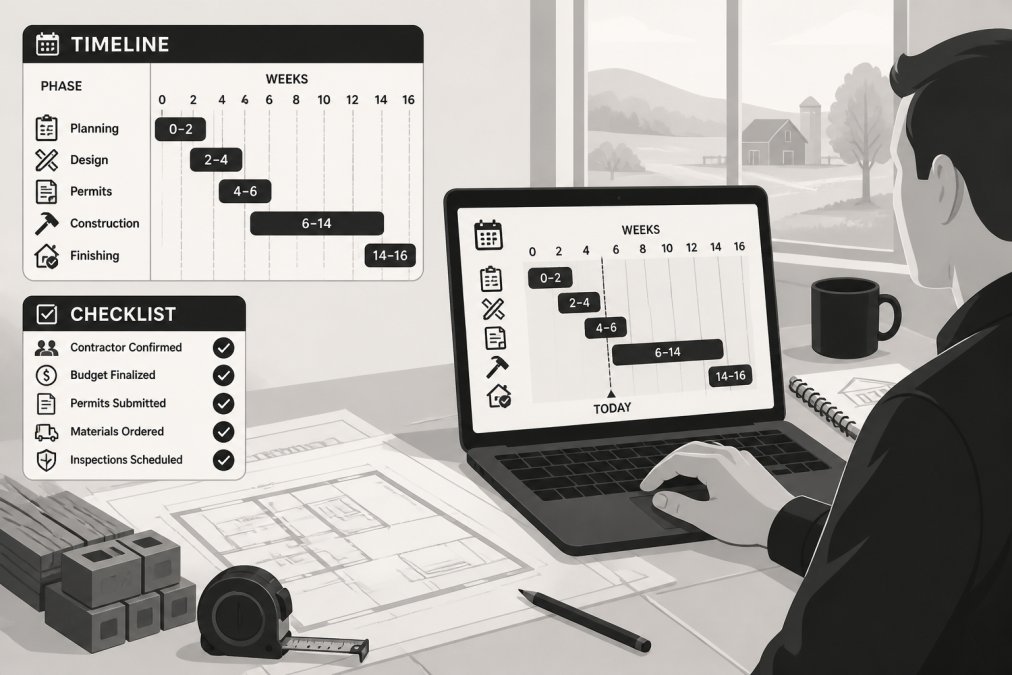
Your renovation timeline depends on scope complexity, contractor availability, material delivery, and weather. A kitchen update might take 6 to 8 weeks. A full-home energy efficiency renovation with structural work could take 4 to 6 months or longer. Rural projects often extend timelines because material delivery takes longer and subcontractor scheduling is less flexible.
Work with your contractor to create a detailed project timeline with phases and milestones. Understand which phases are dependent on others, you can't install finished flooring before the structural work and HVAC upgrades are complete. Identify which phases allow you to stay in your home and which might require temporary relocation. This affects your personal planning and budget.
Weather impacts rural renovations significantly. Winter work becomes difficult and expensive in many regions. Spring and fall are typically optimal for exterior work and foundation repairs. Summer is peak season, which means higher contractor costs and longer wait times. Plan your renovation timeline around realistic seasonal constraints.
Material delivery logistics matter more in rural areas. Suppliers in larger towns might not deliver to remote properties, or delivery costs could be substantial. Your contractor should source materials strategically and arrange delivery timing to match construction phases. Lumber, windows, HVAC equipment, and fixtures all have lead times. Delays in material arrival delay the entire project.
Discuss contingency planning. What happens if the contractor discovers structural damage that wasn't visible before renovation began? What if supply chain delays affect material availability? A good contractor has answers for these scenarios. Timeless General Contracting's Client Project Portal helps manage these uncertainties by keeping everyone informed as situations change, reducing the surprise factor when unexpected issues arise.
Prepare Your Home and Plan for Waste Disposal
Before work begins, prepare your home for construction activity. This means protecting areas that won't be renovated, arranging temporary utilities if needed, and planning how you'll live during the project.
Discuss protective measures with your contractor. Dust barriers, plastic sheeting, and temporary walls protect finished areas from construction debris. If you're staying in your home during renovation, ask how the contractor will minimize disruption to your daily life. Where will workers park? What are their work hours? How will they manage noise levels?
Arrange temporary living solutions if necessary. If your kitchen is being renovated, can you use a temporary kitchen setup? If your bathroom is being updated, do you have access to another one? These practical details affect your comfort during the project. Some homeowners temporarily relocate; others stay and adapt. Either way, plan it explicitly.
Waste disposal is a critical logistical consideration that rural homeowners often underestimate. Construction debris, drywall, flooring, old fixtures, packaging materials, accumulates quickly. Most municipalities don't allow this waste in standard garbage collection. Your contractor must arrange disposal through licensed waste facilities.
In rural areas, waste disposal logistics can be complex. Facilities might be distant, and transportation costs higher. Some contractors arrange a dumpster on-site; others haul waste away in stages. Discuss the contractor's waste management plan upfront. Ask how they handle hazardous materials like old insulation, lead paint, or asbestos if your home was built before these materials were phased out. Proper disposal of hazardous materials is legally required and adds to project costs.
Internet connectivity affects how your contractor manages the project. If your rural property has limited connectivity, discuss how the contractor will handle real-time updates and progress tracking. Some contractors use offline-capable project management tools. Timeless General Contracting's Client Project Portal is designed to work in areas with variable connectivity, ensuring you stay informed even when bandwidth is limited.
Preparing for a home renovation in rural areas requires more planning than urban projects, but the process becomes manageable when you approach it systematically. Define your scope clearly, verify contractor credentials through Red Seal certification, understand permit requirements in your municipality, get detailed cost estimates, and plan logistics with rural constraints in mind. Timeless General Contracting brings 25 years of experience managing exactly these complexities. Our Red Seal certified team understands rural-specific challenges, from well and septic system considerations to waste disposal logistics, and our Client Project Portal keeps you informed throughout the process, so you're never wondering what's happening on your renovation. Get started with a consultation to discuss your project goals and timeline.
Frequently Asked Questions
What is a Red Seal contractor and how do I verify their credentials?
A Red Seal contractor holds a federally recognized trade certification in a skilled trade, such as carpentry, plumbing, or electrical work, and has met rigorous interprovincial standards. Red Seal credentials mean the tradesperson has passed standardized exams and meets consistent qualifications across Canada. Verify credentials by asking for their Red Seal certificate, checking the Red Seal online directory, or contacting the relevant trade body. Red Seal certification is a mark of professional competency and is especially important for complex renovations involving structural or systems work.
Do I need a building permit for home renovations in rural areas?
Yes. Building permits are required for most renovations, including structural changes, electrical work, plumbing, HVAC upgrades, and additions, even in rural areas. Municipal bylaws and building code compliance apply regardless of location. Minor cosmetic work like painting or replacing fixtures may not require permits, but any work affecting safety, structure, or systems does. Contact your local municipality or building inspector to confirm permit requirements before starting. Skipping permits can result in fines, inspection failures, and issues when selling your home.
How much do home renovations typically cost, and what affects pricing?
Renovation costs depend on scope, materials, labor, location, and complexity. Kitchen and bathroom upgrades, structural repairs, and energy efficiency improvements typically represent the largest expenses. Rural projects may have higher labor costs due to contractor travel distances and longer supply chain lead times for materials. Pricing also varies based on local market conditions, contractor experience, and whether you're doing cosmetic updates or deep structural work. Get multiple quotes from licensed contractors and request detailed breakdowns. For current pricing information and a personalized estimate, contact Timeless General Contracting for a consultation.
What's the best way to avoid scope creep and cost overruns during a renovation?
Define your scope of work in writing before hiring a contractor, include specific materials, finishes, and work boundaries. Establish a contingency fund (typically 10-15% of your budget) for unexpected issues. Use a detailed contract that outlines all work, timelines, payment schedules, and change-order procedures. Track all decisions and changes in writing. Real-time project management tools and regular communication with your contractor help catch issues early. Red Seal certified contractors and experienced firms are more likely to provide accurate estimates and manage scope effectively.
This article was written using GrandRanker